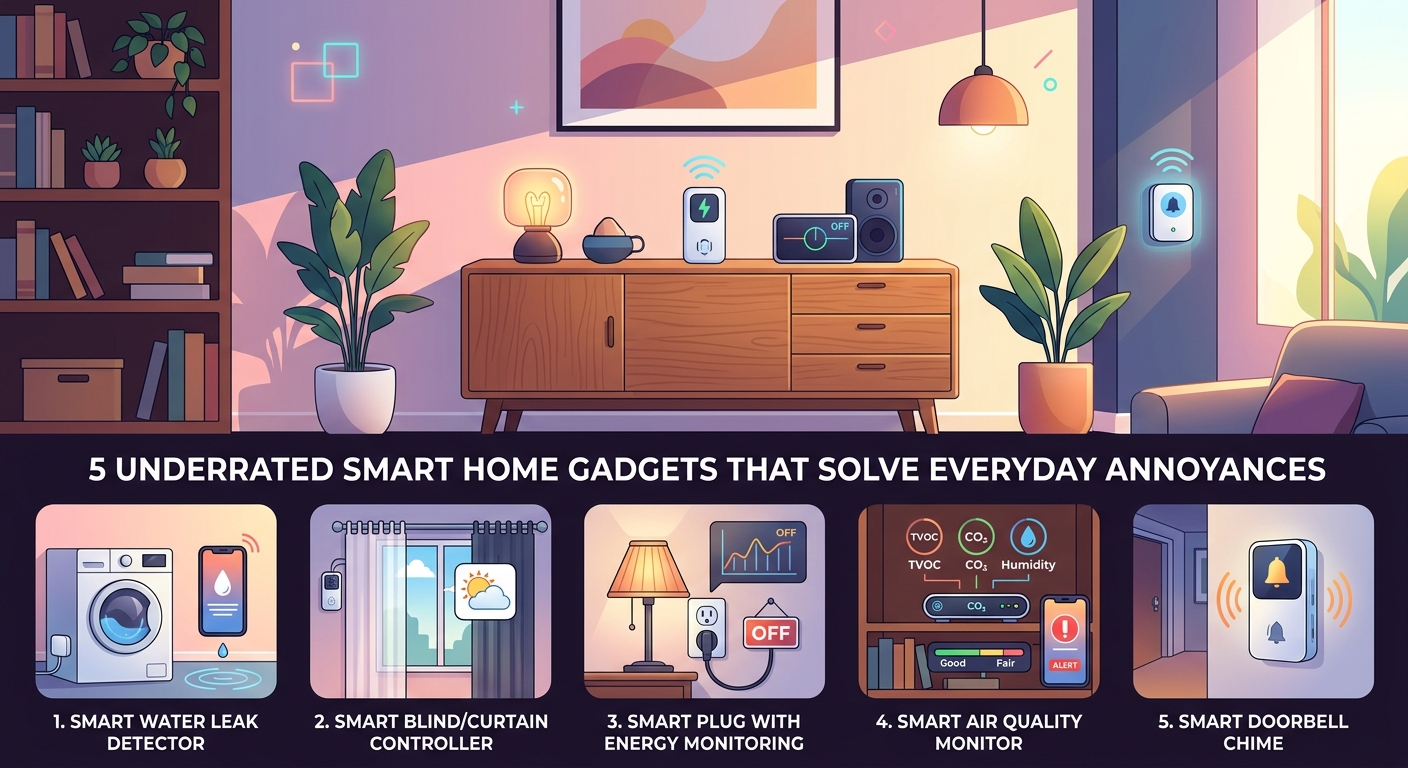
5 Underrated Smart Home Gadgets That Solve Everyday Annoyances
You know that feeling when you’re searching for the TV remote for the tenth time today? Or when you return home to find another dead houseplant on your windowsill? These aren’t just minor inconveniences. They’re daily frustrations that chip away at your sanity, one annoying moment at a time.
The good news is that smart home technology has evolved beyond flashy voice assistants and color-changing light bulbs. There’s a whole category of practical devices designed to fix specific problems you actually face. Not the problems marketers think you have, but the real ones.
Smart home gadgets that solve everyday problems focus on functionality over hype. From tracking lost items to automating plant care, these devices address specific daily frustrations like package theft, forgotten pet feeding, and wasted energy. The best solutions integrate seamlessly into your routine without requiring constant app management or complex setup processes.
Why mainstream smart home devices miss the mark
Walk into any electronics store and you’ll see the same products on display. Smart speakers that listen to everything. Thermostats that cost more than your monthly heating bill. Security cameras that require a subscription just to save footage.
These aren’t bad products. They’re just solving problems that most people don’t prioritize.
The real annoyances happen in smaller moments. When you can’t find your keys before an important meeting. When your package gets stolen from your doorstep. When you forget to water your plants until they’re beyond saving.
These are the gaps where truly useful smart home technology lives.
The problem with buying trendy tech
Tech enthusiasts love to chase the latest releases. But trendy doesn’t mean practical.
A $300 smart mirror that shows you the weather while you brush your teeth sounds cool. But does it solve a problem you actually have? Probably not.
The devices worth your money are the ones that eliminate friction from tasks you already do. They should make your life measurably easier, not just slightly more futuristic.
Before buying any smart home device, ask yourself one question: “What specific annoyance will this fix?” If you can’t answer immediately, keep looking.
Smart item trackers that actually prevent lost belongings
Tile trackers and AirTags get all the attention. But there’s a better solution for people who constantly misplace the same items.
Chipolo Card fits perfectly in your wallet. It’s thin enough that you won’t notice it, but loud enough that you’ll hear it from across your apartment. The battery lasts two years, and replacement is simple.
For remote controls, KeySmart’s SmartCard attaches directly to the back with adhesive. No more couch cushion excavations.
Here’s how to set up an effective tracking system:
- Identify the three items you lose most often (keys, wallet, remote, phone, etc.)
- Attach a different tracker to each item with a unique ringtone
- Test the range in your home to ensure coverage in every room
- Set up separation alerts so you get notified if you leave something behind
The separation alerts are the real game changer. Your phone buzzes the moment you walk away from your wallet. You’ll never leave the coffee shop without it again.
Automatic plant watering systems for serial plant killers
You bought that fiddle leaf fig with good intentions. Three weeks later, it’s crispy and brown.
The problem isn’t that you don’t care. It’s that you can’t remember which plants need water and when. Different species have different needs, and keeping track is genuinely hard.
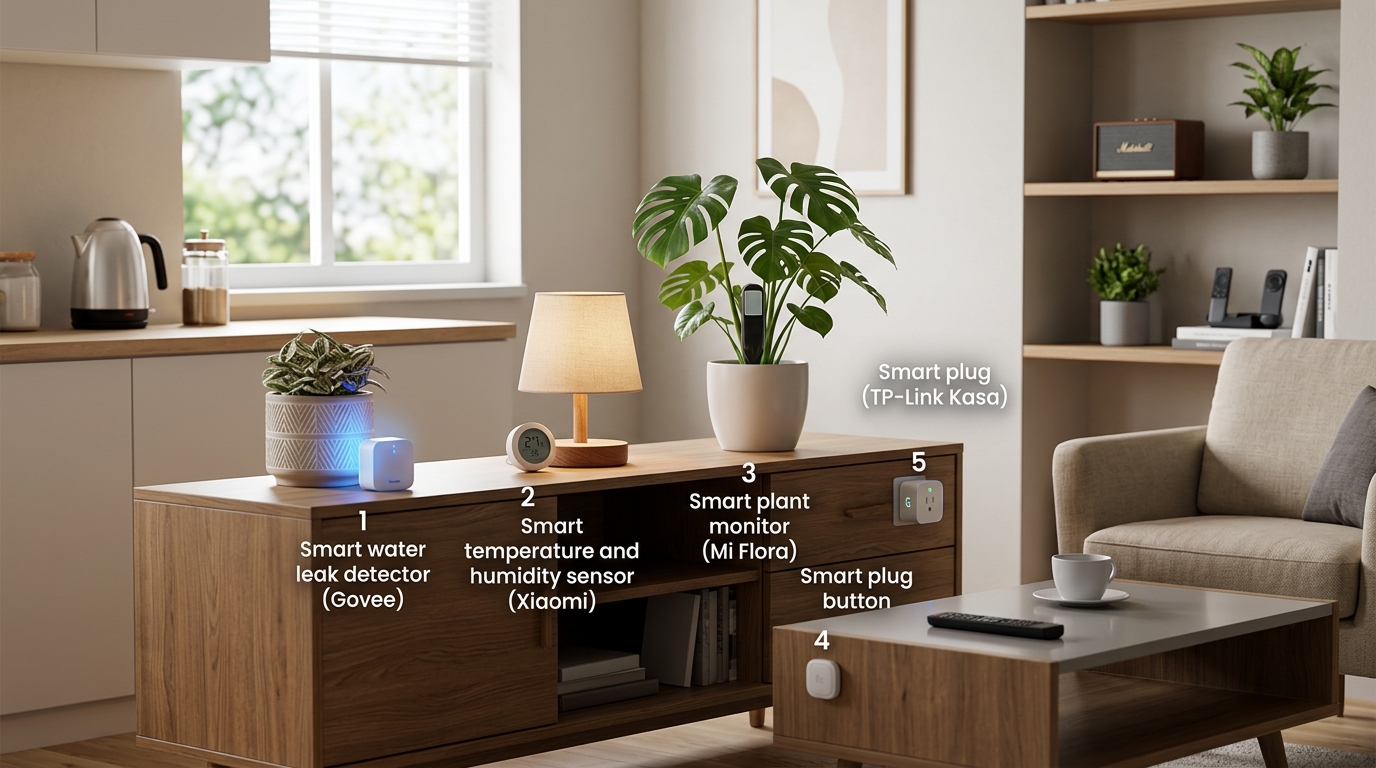
Smart plant sensors like Xiaomi Mi Flora monitor soil moisture, light levels, and fertilizer needs. They send notifications to your phone when action is required. No more guessing games.
For people who travel frequently, self-watering planters with app controls are worth the investment. Lechuza Classico and Click & Grow systems have built-in reservoirs that last weeks.
“The best smart home devices are the ones you forget are even there. They should solve problems invisibly, without adding new tasks to your mental checklist.” – Home automation specialist Sarah Chen
Package delivery boxes that stop porch pirates
Package theft jumped 43% in the past two years. Doorbell cameras record the crime, but they don’t prevent it.
Smart delivery boxes do.
Yale Smart Delivery Box is a weatherproof container that couriers can unlock with a one-time code. They place your package inside, lock it, and the code expires. You retrieve it whenever you get home.
The box connects to your existing smart home system. You get a notification when a delivery happens. No subscriptions required.
For apartment dwellers without porch space, Parcel Pending lockers are appearing in more buildings. Check with your landlord about installation.
Comparison of smart home solutions versus traditional methods
| Problem | Traditional solution | Smart home solution | Time saved per week |
|---|---|---|---|
| Lost remote control | Search couch, under cushions | Press button on phone to make it beep | 30 minutes |
| Dead houseplants | Remember to check soil daily | Automatic moisture monitoring with alerts | 45 minutes |
| Package theft | Hope for the best, file police reports | Secure smart delivery box | Varies |
| Forgetting to feed pets | Sticky notes, phone reminders | Automatic feeder with portion control | 2 hours |
| Wasted electricity from forgotten devices | Manual checks before leaving | Smart plugs with scheduling | 1 hour |
Smart pet feeders for inconsistent schedules
Your cat doesn’t care that you had a late meeting. She wants dinner at 6 PM sharp.
Automatic pet feeders solve this with precision timing. But the cheap ones jam constantly and dispense random amounts.
PetSafe Smart Feed works with both dry and semi-moist food. You can trigger feedings remotely if you’re stuck in traffic. The portion control is accurate to the gram, which matters for pets on specific diets.
The built-in camera lets you check if your pet actually ate. Some animals are picky and will ignore food if it’s been sitting too long.
For multiple pets with different dietary needs, SureFeed Microchip Pet Feeder opens only for the registered animal. Your dog can’t steal the cat’s prescription food anymore.
Energy monitoring plugs that identify power vampires
Your electricity bill is higher than it should be. But which devices are the culprits?
Smart plugs with energy monitoring show you exactly what’s consuming power. TP-Link Kasa plugs track usage by hour, day, and month. The app breaks down costs in actual dollars.
You’ll discover surprising things. That old desktop computer in standby mode? It’s costing you $8 per month. The cable box you never use? Another $6.
Once you identify the vampires, you can set schedules to cut power completely during off hours. The plugs pay for themselves within a few months.
Some devices you should monitor:
- Gaming consoles in rest mode
- Coffee makers with clock displays
- Desktop computers and monitors
- Cable boxes and DVRs
- Phone chargers left plugged in
- Space heaters and window AC units
The data might surprise you. Many people find that their “energy efficient” devices aren’t as efficient as advertised.
Smart locks that eliminate the lost key problem
Fumbling for keys while carrying groceries is annoying. Locking yourself out is expensive.
Smart locks with keypad entry solve both problems. August Wi-Fi Smart Lock installs over your existing deadbolt in about 10 minutes. No need to replace the entire mechanism.
You can create temporary codes for dog walkers, cleaners, or Airbnb guests. The codes expire automatically after the set period. No more wondering if someone made a copy of your key.
The auto-lock feature is underrated. The door locks itself 30 seconds after you close it. You’ll never again wonder if you remembered to lock up before leaving for vacation.
For renters worried about lease violations, most smart locks are completely reversible. You can reinstall the original hardware when you move out.
Leak detectors that prevent water damage disasters
A small leak under your sink can cause thousands in damage before you notice it. By the time you see water pooling, the subfloor is already rotting.
Smart water leak detectors sit on the floor near potential problem areas. When they sense moisture, they sound an alarm and send alerts to your phone.
Place them under sinks, behind toilets, near water heaters, and by washing machines. Flo by Moen also monitors your entire home’s water pressure and can shut off the main valve if it detects a burst pipe.
The insurance savings alone make these worthwhile. Many providers offer discounts if you have leak detection installed.
Smart blinds for better sleep and energy savings
Blackout curtains help you sleep, but opening them manually every morning gets old fast.
Motorized smart blinds open gradually at sunrise, simulating natural wake-up conditions. Your body responds better to gradual light than jarring alarm sounds.
They also close automatically when your home reaches a certain temperature, blocking heat in summer and retaining warmth in winter. The energy savings are measurable.
IKEA’s Fyrtur blinds are surprisingly affordable compared to custom motorized options. They integrate with most smart home platforms and don’t require professional installation.
For shift workers who need darkness during the day, scheduled automation is essential. Your blinds close when you need to sleep, regardless of the time.
Mistakes people make when choosing smart home devices
Buying devices that don’t work together is the biggest error. You end up with five different apps and no automation between systems.
Check compatibility before purchasing. Most devices now support Matter, the new universal smart home standard. This ensures everything can communicate regardless of manufacturer.
Another common mistake is prioritizing features over reliability. A device with 50 functions that crashes weekly is worse than a simple device that works every time.
Read reviews from people who’ve owned the product for at least six months. Early reviews miss long-term issues like battery degradation, connectivity problems, and software abandonment.
Also consider what happens when tech giants stop supporting your device. Cloud-dependent gadgets become paperweights when servers shut down.
Setting up your first practical smart home ecosystem
Start with one problem that genuinely bothers you. Don’t try to automate everything at once.
If you constantly lose your keys, begin with an item tracker. If your plants keep dying, start with a moisture sensor. Solve one annoyance completely before moving to the next.
Choose a central hub or platform. Google Home, Amazon Alexa, and Apple HomeKit all have strengths. Pick based on devices you already own.
Your smartphone is probably your hub already. Most people don’t need a separate smart speaker unless they specifically want voice control.
Test each device thoroughly before buying multiples. One smart plug might work perfectly in your home while another constantly disconnects. Don’t assume all products in a category perform equally.
Integration with existing technology matters more than you think
The best smart home devices enhance what you already use. They shouldn’t force you to change your entire routine.
If you’ve spent time optimizing your router settings, make sure new devices won’t overwhelm your network. Some cameras and hubs are bandwidth hogs.
Battery-powered devices are often better than those requiring outlets. You can place them exactly where needed without worrying about cord placement.
Look for devices with local control options. If your internet goes down, you should still be able to use basic functions. Cloud-only devices are useless during outages.
Budget considerations for practical smart home upgrades
You don’t need to spend thousands to solve everyday problems. Start with devices under $50 that address your biggest frustrations.
A $25 smart plug that turns off your space heater automatically is more valuable than a $300 smart speaker that tells you jokes.
Buy refurbished when possible. Many retailers offer certified refurbished smart home devices at 30-40% discounts. They work identically to new units and include warranties.
Wait for seasonal sales. Black Friday and Prime Day see significant discounts on home automation products. Set price alerts for items on your wish list.
Consider the total cost of ownership. A device requiring a monthly subscription might seem affordable initially, but adds up to hundreds over a few years. One-time purchase devices are usually cheaper long term.
Privacy and security in practical smart home setups
Every connected device is a potential security risk. But you can minimize exposure with basic precautions.
Change default passwords immediately. Most smart home breaches happen because people never update factory settings.
Create a separate network for smart home devices. If one gets compromised, hackers can’t access your main computers and phones. Most modern routers support guest networks that work perfectly for this.
Disable features you don’t use. If you never use remote access, turn it off. Each enabled feature is another potential vulnerability.
Read privacy policies before buying. Some companies sell your usage data to advertisers. Others keep everything local. The difference matters.
For cameras and microphones, physical privacy switches are better than software toggles. You can see at a glance whether the device is actually off.
Maintenance and longevity of everyday smart devices
Smart home devices require occasional updates and maintenance. Budget time for this.
Set a monthly reminder to check for firmware updates. Outdated software creates security vulnerabilities and performance issues.
Clean sensors regularly. Dust and grime affect accuracy on moisture sensors, motion detectors, and cameras. A microfiber cloth every few weeks prevents problems.
Replace batteries proactively. Don’t wait until devices stop working. Check battery levels monthly and swap them at 20% remaining.
Most smart home devices last 3-5 years before needing replacement. Plan accordingly in your budget. Technology improves rapidly, so older devices may lack features that become standard.
Real solutions for real frustrations
The smartest smart home isn’t the one with the most gadgets. It’s the one that solves your specific problems without creating new ones.
Focus on devices that eliminate genuine daily annoyances. Ignore the hype around features you’ll never use. Start small, test thoroughly, and expand only when you’ve proven value.
Your home should work for you, not the other way around. The right smart home gadgets fade into the background, fixing problems so smoothly you forget they’re even there. That’s when you know you’ve chosen well.

Post Comment