How to Spot Fake Tech Reviews Before Making Your Next Purchase
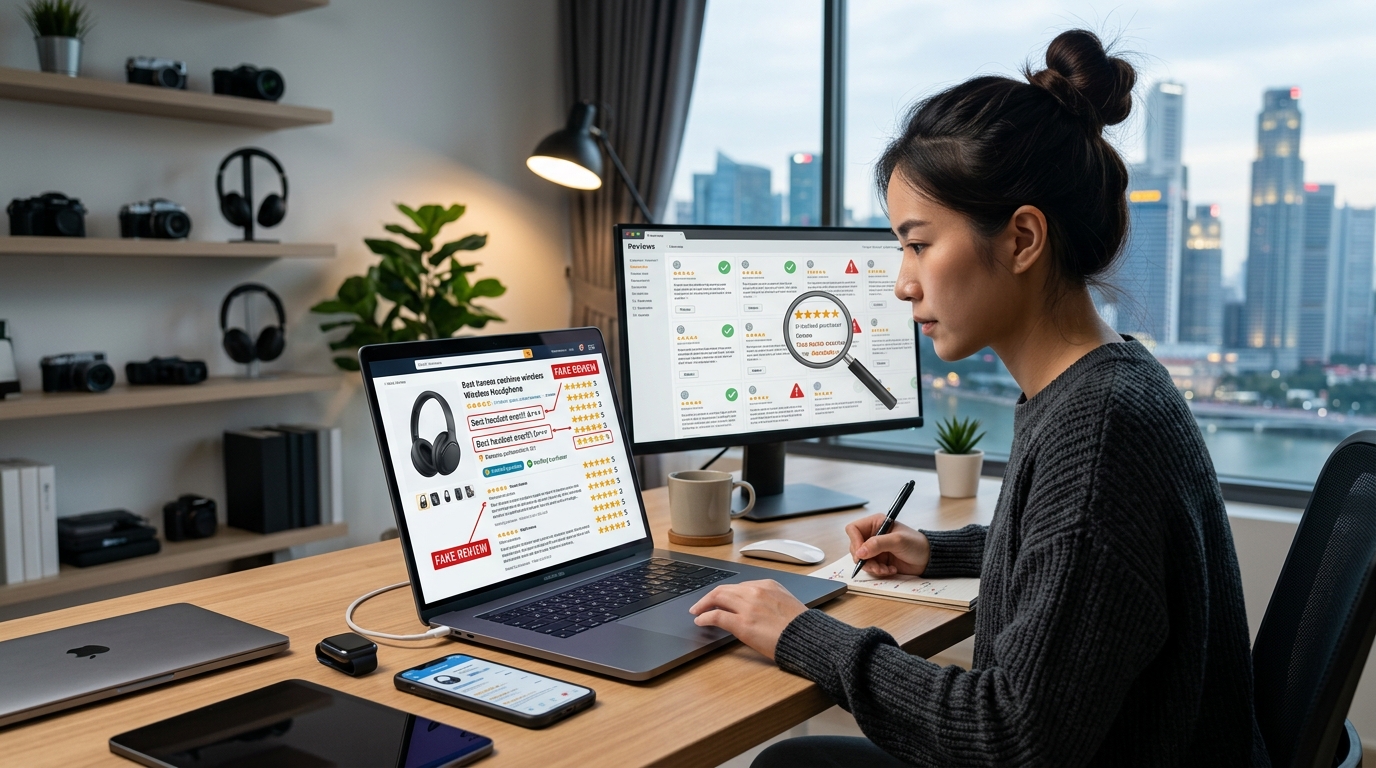
You’re about to drop $800 on a new laptop. The product has 4.8 stars and hundreds of glowing reviews. But something feels off. Maybe the reviews sound too similar, or they all appeared within the same week. Your gut is telling you something, and you should listen.
Fake reviews plague major e-commerce platforms, misleading millions of shoppers annually. By examining review patterns, language quality, reviewer profiles, and timing, you can identify fraudulent feedback. Use verification tools, cross-reference multiple platforms, and trust your instincts when something seems manufactured. Authentic reviews include specific details, balanced perspectives, and natural language that reflects real user experiences rather than promotional copy.
Why fake reviews are everywhere right now
Sellers face intense competition on platforms like Amazon and Walmart. A single star rating difference can mean thousands in lost revenue. This pressure creates a massive market for fake reviews.
Some companies pay reviewers directly. Others offer free products in exchange for five-star ratings. The most sophisticated operations use networks of fake accounts that appear legitimate at first glance.
Studies suggest that up to 30% of online reviews might be fake or incentivized. That’s nearly one in three. The problem affects everything from budget smartwatches to expensive electronics.
Red flags that scream fake review
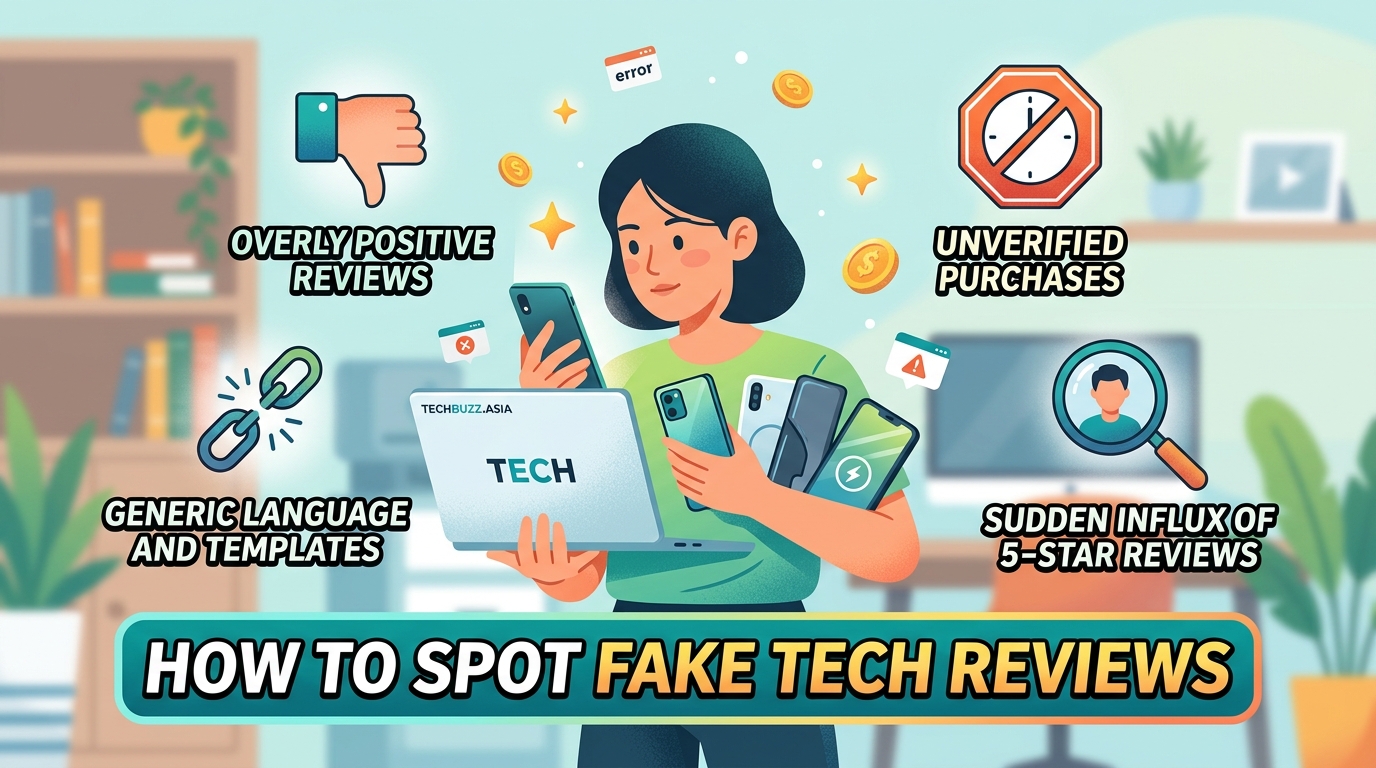
Certain patterns appear consistently in fraudulent feedback. Learning to recognize them takes practice, but the signs are clear once you know what to look for.
Generic praise without specifics
Real users mention actual features. They talk about battery life lasting through their commute. They describe how the keyboard feels during late-night typing sessions. They share frustrations about setup processes.
Fake reviews stay vague. “Great product!” and “Highly recommend!” mean nothing without context. If a review could apply to any product in the category, it probably came from someone who never used it.
Suspiciously perfect grammar or obvious errors
Professional fake review services often employ writers who produce flawless copy. Every sentence flows perfectly. No typos exist. The writing sounds like marketing material because it basically is.
On the flip side, some fake reviews contain bizarre grammar mistakes or awkward phrasing. These often come from overseas review farms using translation software. Real reviews have natural imperfections that match how people actually communicate.
Review bombing in tight timeframes
Check the dates. Did 50 five-star reviews appear within three days of each other? That’s not organic growth. Real products accumulate reviews gradually as customers receive and test them.
The same applies to sudden waves of one-star reviews. Competitors sometimes attack rival products with fake negative feedback. Both extremes deserve skepticism.
The verification process that actually works
Follow these steps every time you’re considering a significant purchase. The process takes five minutes but can save you from expensive mistakes.
-
Read the three-star reviews first. These tend to be most honest. Customers who give middle ratings usually provide balanced perspectives, mentioning both strengths and weaknesses.
-
Click on reviewer profiles. Look at their history. Someone with 200 reviews posted in the last month is probably not a genuine customer. Real people review products occasionally, not professionally.
-
Search for the same product on competing platforms. Compare reviews across Amazon, Best Buy, and Walmart. Genuine products receive similar feedback everywhere. Fake review campaigns usually target one platform.
-
Check if reviews mention receiving free products. Amazon requires disclosure, but enforcement varies. Phrases like “received for testing” or “provided by seller” indicate potential bias.
-
Look for verified purchase badges. Not foolproof, but this indicator suggests the reviewer actually bought the item through that platform.
Language patterns that reveal the truth

Authentic reviews have a conversational quality. People write like they talk. They use contractions. They make minor errors. They go off on tangents about their specific use case.
“The best fake review detector is your own reading comprehension. If you finish a review and can’t picture the actual person using the product, there probably wasn’t one.” – Consumer protection researcher
Pay attention to emotional authenticity. Someone genuinely frustrated with smartphone battery degradation writes differently than someone pretending to be upset for $5.
Real negative reviews often include phrases like “I really wanted to love this” or “It works fine for some people, but…” Fake negative reviews tend toward absolute statements without nuance.
The reviewer profile investigation
Clicking through to a reviewer’s profile reveals crucial information. This step separates casual checkers from serious investigators.
- Review frequency: Does this person post multiple reviews daily? That’s a job, not a hobby.
- Product variety: Real shoppers buy diverse items. Fake accounts often review only one product category.
- Photo quality: Professional-looking photos in every review suggest compensation or free products.
- Helpful votes: Authentic reviewers accumulate helpful votes over time from other users.
Brand new accounts with only one review deserve extra scrutiny. While everyone starts somewhere, first-time reviewers posting five-star praise for obscure products raise questions.
Tools that automate fake review detection
Several browser extensions and websites analyze reviews for you. These tools scan thousands of reviews in seconds, identifying suspicious patterns.
Fakespot and ReviewMeta are popular options. Both assign grades based on review authenticity. They flag suspicious reviewer behavior, unnatural rating distributions, and other warning signs.
These tools aren’t perfect. They sometimes mark legitimate reviews as suspicious or miss sophisticated fake review operations. Use them as one data point among several, not as your sole decision-making tool.
Platform-specific tricks sellers use
Each major retailer has unique vulnerabilities that sellers exploit. Understanding these platform-specific tactics helps you stay alert.
Amazon variations
Sellers sometimes merge product listings. A highly-rated phone case listing becomes a completely different product overnight. The reviews stay, but they no longer match what you’re buying.
Check if reviews mention the exact product you’re viewing. If reviewers describe features your product doesn’t have, the listing probably changed.
Walmart marketplace confusion
Walmart’s marketplace includes third-party sellers alongside Walmart’s own inventory. Some sellers create confusion by using similar product titles and images to piggyback on legitimate items’ reputations.
Verify you’re buying from the seller you think you are. Check the “Sold by” line carefully.
Best Buy verified purchases
Best Buy’s verified purchase system is relatively reliable, but the platform has fewer reviews overall. Cross-reference Best Buy reviews with other platforms for a complete picture.
What real reviews actually look like
Authentic feedback shares common characteristics. These reviews feel like conversations with friends who recently bought something.
They mention specific use cases. “I needed this for my home office setup” or “Bought this for my kid’s online classes.” Context matters to real users.
They include minor complaints even in positive reviews. “Love the sound quality, wish the cord was longer.” Nothing is perfect, and honest reviewers acknowledge that.
They answer questions other shoppers might have. “I was worried about the size, but it fits perfectly on my desk.” Real reviewers empathize with future buyers.
The comparison table method
Create a simple comparison when evaluating reviews across platforms. This structured approach prevents you from relying on memory or gut feelings alone.
| Platform | Total Reviews | Verified % | Common Complaints | Review Date Range | Average Rating |
|---|---|---|---|---|---|
| Amazon | 847 | 62% | Battery life, setup | 6 months | 4.3 |
| Best Buy | 156 | 89% | Price, battery | 8 months | 4.1 |
| Walmart | 203 | 71% | Battery, weight | 5 months | 4.4 |
Consistency across platforms suggests authenticity. When similar complaints appear everywhere, they’re probably legitimate concerns. When ratings vary wildly between platforms, investigate further.
Red flags in photos and videos
User-generated media can be faked too. Professional product photos masquerading as customer uploads are common.
Real customer photos show products in actual homes. You’ll see messy desks, regular lighting, and casual compositions. The images often include comparison shots with everyday objects for scale.
Fake photos look too good. Perfect lighting. Professional staging. No context clues about real-world use.
Videos are harder to fake but not impossible. Watch for reviewers who never show their face or use obvious stock footage. Authentic video reviews feel personal and unrehearsed.
Timing tells its own story
Product launch timing affects review authenticity. New products shouldn’t have hundreds of reviews on day one. Physical products need time to ship, get used, and generate feedback.
Seasonal patterns matter too. Gaming laptops see review spikes around holidays and back-to-school periods. Sudden review activity outside these windows deserves attention.
Check if negative reviews appeared after positive ones. Some sellers buy fake positive reviews at launch, then authentic customers leave honest feedback later. The rating trend over time reveals this pattern.
Questions fake reviewers can’t answer
Many platforms let you ask questions on reviews. This feature exposes fake reviewers who never actually used the product.
Ask specific questions about features, compatibility, or use cases. “Does this work with the XL model?” or “How long does the battery last with heavy use?”
Fake reviewers either ignore questions or give vague responses. Real users often provide detailed answers because they genuinely used the product.
Building your personal review strategy
Develop a consistent approach for every purchase over a certain dollar amount. Maybe that’s $50, maybe it’s $200. Set your threshold based on your budget and risk tolerance.
Your strategy might include:
- Reading at least 20 reviews across different star ratings
- Checking reviewer profiles for the most helpful positive and negative reviews
- Searching the product name plus “problems” or “issues” on Google
- Watching at least two video reviews from different sources
- Comparing prices and reviews across three platforms
Consistency prevents impulse purchases based on manipulated feedback. The process becomes automatic after a few times.
When to trust your instincts over ratings
Sometimes a product with mediocre ratings is exactly what you need. Other times, a five-star item will disappoint you.
Ratings reflect average experiences. Your needs might differ from the majority. Someone complaining about a laptop being “too heavy for travel” might be describing exactly the sturdy build quality you want.
Read reviews looking for your specific use case. Filter out complaints that don’t apply to how you’ll use the product. A mechanical keyboard that’s “too loud for office use” might be perfect for your home gaming setup.
The role of seller responses
How sellers respond to negative reviews reveals a lot. Professional, helpful responses to criticism suggest a legitimate business. Defensive, aggressive, or generic responses raise concerns.
Watch for sellers offering refunds or replacements in response to problems. This indicates they stand behind their products. Sellers who ignore negative reviews or attack reviewers probably won’t support you either.
Some sellers post fake negative reviews themselves, then respond heroically to demonstrate customer service. These reviews often describe easily-solved problems that make the seller look good.
Making the final decision
You’ve checked reviews across platforms. You’ve investigated suspicious patterns. You’ve read through reviewer profiles. Now what?
Weigh the evidence. A few fake-looking reviews among hundreds of authentic ones might not matter. But if half the reviews seem suspicious, keep shopping.
Consider the stakes. Buying a $15 phone case carries different risk than purchasing a $1,500 laptop. Adjust your verification effort accordingly.
Look for consistent themes in authentic reviews. If multiple verified purchasers mention the same strength or weakness, that information is probably reliable.
Protecting yourself beyond reviews
Reviews are one data point. Don’t ignore other factors like return policies, warranty coverage, and payment protections.
Major credit cards offer purchase protection. PayPal provides dispute resolution. These safeguards matter when reviews mislead you.
Buy from sellers with established reputations when possible. A product sold directly by Amazon or Best Buy comes with more recourse than one from an unknown third-party seller.
Save screenshots of product descriptions and reviews before purchasing. If the item doesn’t match what was advertised, you’ll have evidence for returns or disputes.
Your defense against review manipulation
Sellers will keep trying to game the system. Platforms will keep updating their detection methods. The arms race continues.
Your best defense is informed skepticism. Don’t assume all reviews are fake, but don’t assume they’re all real either. Treat them as data requiring verification.
Share what you learn. When you spot obvious fake reviews, report them. Leave your own honest reviews after purchases. The more genuine feedback exists, the harder fake reviews become to hide.
The five minutes you spend checking reviews before a purchase protects your money and reduces frustration. Make it a habit, and you’ll rarely get burned by fake feedback again.




Post Comment