How to Choose Between Noise-Cancelling Earbuds and Over-Ear Headphones
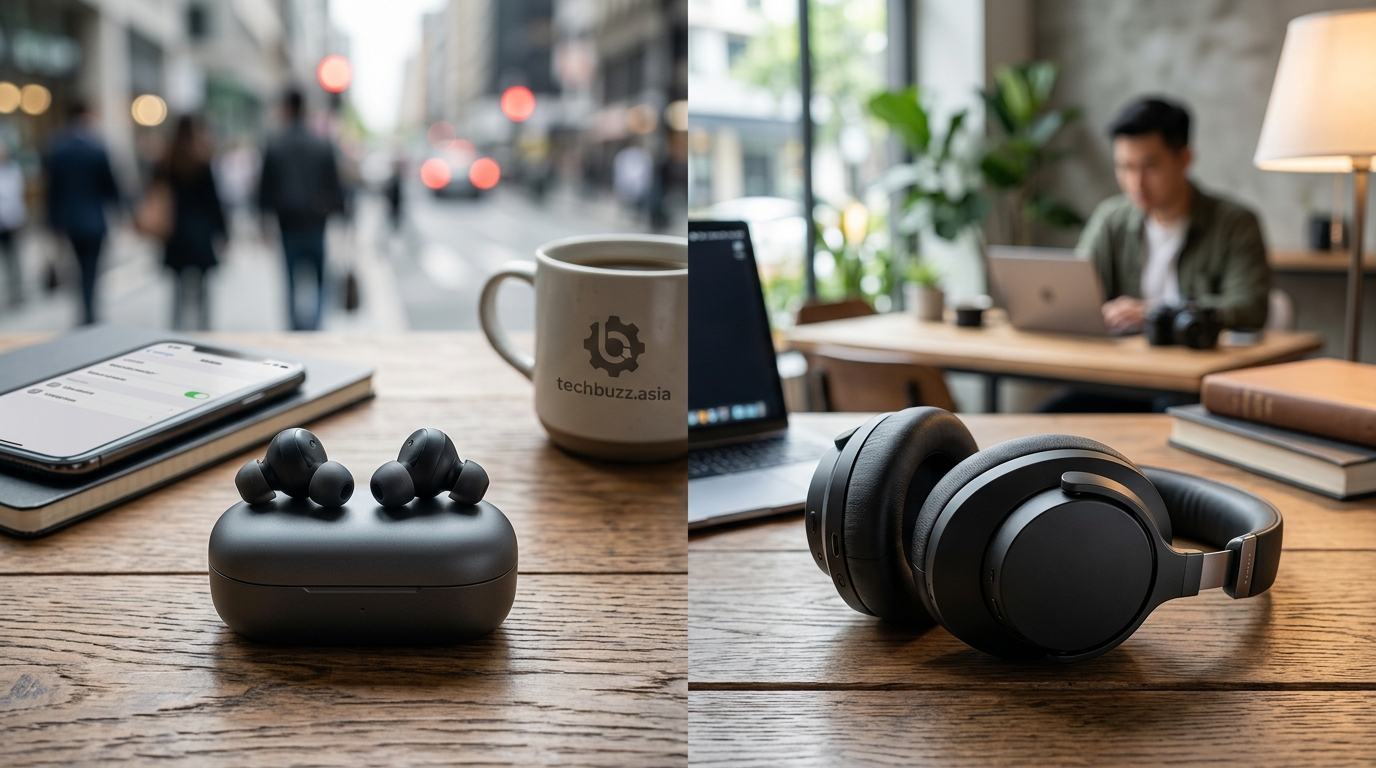
You’re standing in the electronics aisle, staring at rows of audio gear, wondering which type will actually survive your daily commute without giving you a headache. The choice between noise cancelling earbuds and over ear headphones isn’t just about sound quality anymore. It’s about whether you want to carry a case the size of a sandwich or deal with flattened hair after your morning workout.
Noise cancelling earbuds excel at portability and gym sessions, fitting into pockets and staying secure during movement. Over ear headphones deliver superior sound quality and longer battery life but demand more carrying space. Your choice depends on whether you prioritize convenience or performance. Most travelers pick earbuds for flights, while home listeners prefer over ear models for extended listening sessions without ear fatigue.
Sound quality differences you’ll actually notice
Over ear headphones create a physical seal around your entire ear. This design gives them a natural advantage for bass response and soundstage width.
The larger drivers inside over ear models can push more air. You’ll hear deeper lows and a more spacious presentation. Orchestral music, movie soundtracks, and bass heavy tracks reveal layers that earbuds struggle to reproduce.
Earbuds sit inside or just outside your ear canal. Modern premium earbuds have closed the gap significantly, but physics still matters. The smaller drivers limit how much air they can move, which affects bass depth and overall volume potential.
That said, high end earbuds from brands like Sony, Apple, and Bose deliver impressive audio that satisfies most listeners. You won’t miss the difference unless you’re comparing them side by side or listening to reference quality recordings.
“The best headphones are the ones you’ll actually wear. A $400 pair sitting in your drawer does nothing for your music experience.” – Audio engineer recommendation from multiple product testing sessions
Comfort during extended wear
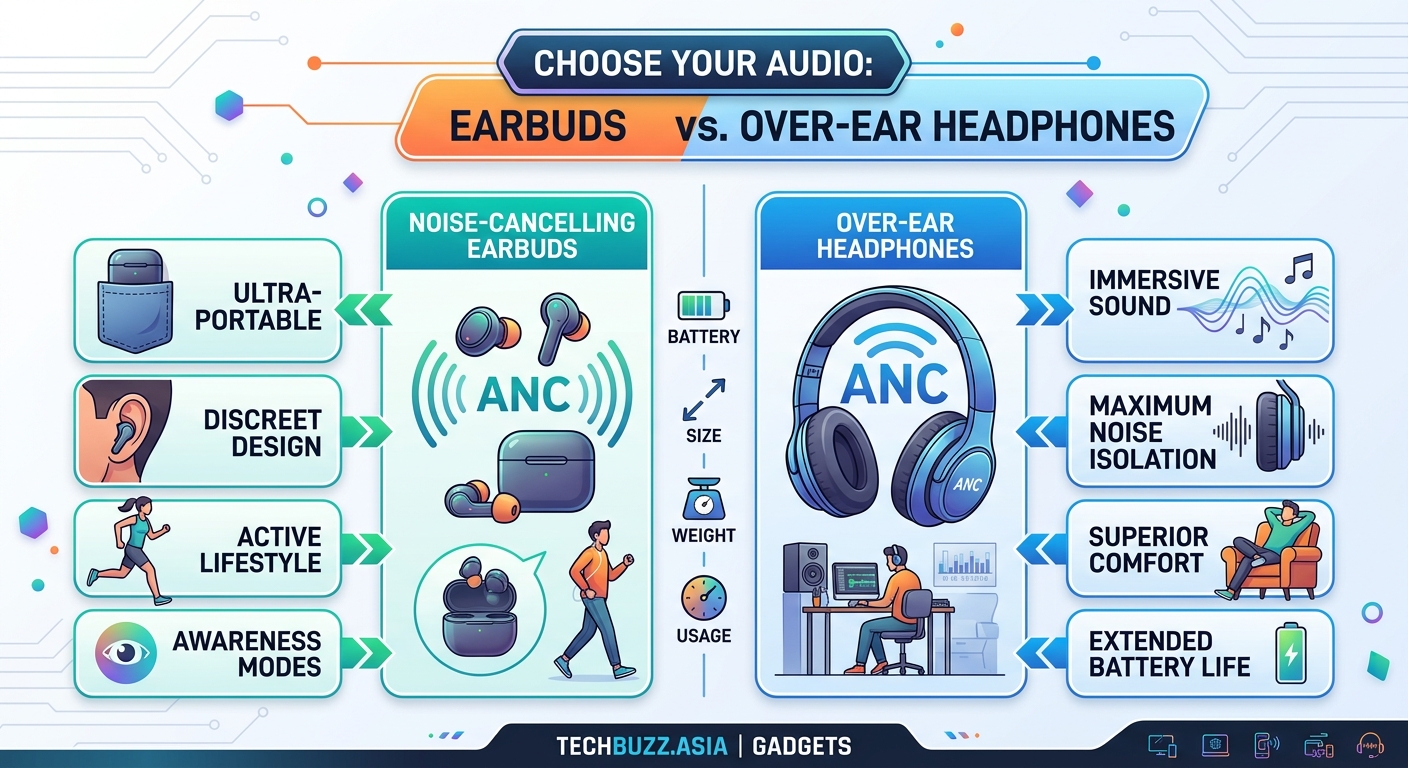
Over ear headphones distribute pressure across your entire ear and the top of your head. After two hours, that headband pressure becomes noticeable. Some people get headaches. Others just feel the weight.
Earbuds create pressure points inside your ear canal. The first 30 minutes feel fine. After an hour, your ears might feel sore or fatigued. Switching to different sized tips helps, but everyone’s ear shape is different.
Here’s what matters for different use cases:
- Office work (4-8 hours): Over ear models with plush padding win. Take them off every 90 minutes to prevent headband fatigue.
- Commuting (30-60 minutes): Earbuds are perfect. You won’t hit the fatigue point, and they’re easier to remove when someone asks you a question.
- Gym sessions: Earbuds stay put during burpees. Over ear headphones slide around and trap sweat.
- Air travel: This one splits. Earbuds for short flights under three hours. Over ear for long haul journeys where sound quality matters more than pocket space.
Temperature plays a bigger role than most reviews mention. Over ear headphones trap heat around your ears. Summer commutes become sweaty affairs. Winter walks feel cozy. Earbuds let your ears breathe but offer no warmth when temperatures drop.
Portability and carrying convenience
Earbuds fit in your front pocket. The case adds maybe an inch of thickness. You can carry them everywhere without thinking about it.
Over ear headphones need a bag. Even foldable models take up significant space. The hard cases protect them but add bulk. Soft pouches save space but risk damage if you toss your bag around.
Consider your daily routine:
- Check what bag you carry most days. A backpack handles over ear headphones easily. A small purse or no bag at all makes earbuds the obvious choice.
- Count how many times you put your audio gear away and take it back out. Multiple transitions favor earbuds. One long session makes over ear headphones worth the setup.
- Think about where you’ll store them at your destination. Desk drawer? Gym locker? Car cup holder? The storage space available affects which format works better.
Battery life and charging habits
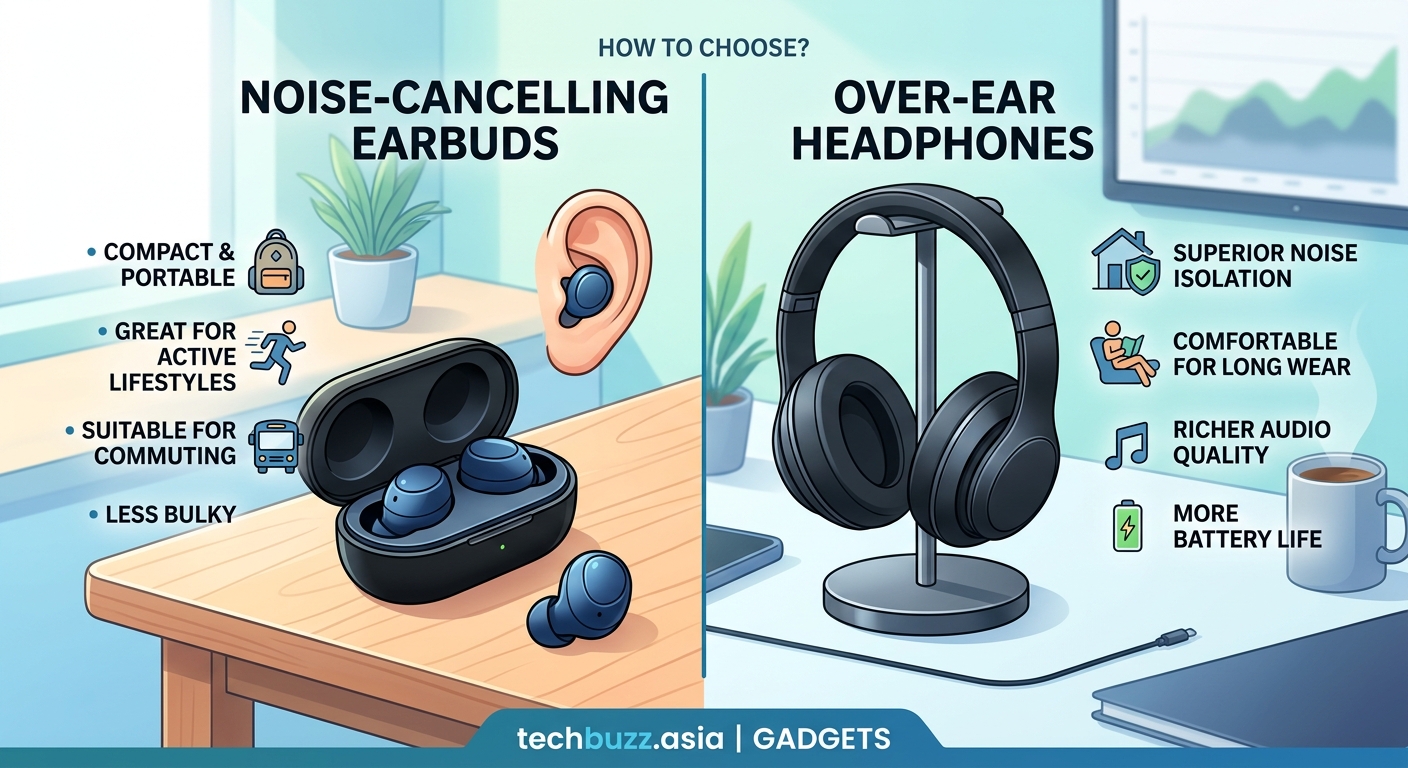
Over ear headphones typically deliver 20 to 30 hours of playback with active noise cancelling enabled. You can go a full week between charges with moderate use.
Earbuds max out around 6 to 8 hours per charge. The case adds another 20 to 30 hours of total battery life, but you need to remember to dock them. Forget once, and you’re stuck with dead earbuds the next morning.
Charging speed matters too. Most over ear models take two to three hours for a full charge. Earbuds charge faster, usually hitting full capacity in 90 minutes inside their case. Many support fast charging that gives you an hour of playback from a 10 minute charge.
| Feature | Earbuds | Over Ear Headphones |
|---|---|---|
| Single charge duration | 6-8 hours | 20-30 hours |
| Total with case/storage | 24-32 hours | 20-30 hours |
| Charging time | 90 minutes | 2-3 hours |
| Fast charge benefit | 1 hour from 10 min | 3-5 hours from 15 min |
| Charging frequency | Every 1-2 days | Once per week |
Battery degradation affects both formats. After two years, expect about 70% of original capacity. This hits earbuds harder because their starting battery life is already shorter. Your 8 hour earbuds become 5.6 hour earbuds. Your 30 hour headphones drop to 21 hours, which still covers most use cases comfortably.
Similar to how smartphone batteries degrade over time, keeping your audio devices between 20% and 80% charge extends their lifespan.
Noise cancellation performance
Both formats use similar active noise cancellation technology. Microphones pick up external sound, and the device generates inverse sound waves to cancel it out.
Over ear headphones start with an advantage. The physical ear cups block sound passively before the electronics even kick in. This dual layer approach handles low frequency rumble and high frequency hiss equally well.
Earbuds rely more heavily on their electronic cancellation. They create a seal with silicone or foam tips, but it’s less complete than an over ear cup. Wind noise becomes a bigger problem because the microphones sit more exposed.
Real world performance depends on your environment:
- Airplane cabin noise: Both work excellently. Over ear models edge ahead slightly on engine rumble.
- Coffee shop chatter: Earbuds and over ear models perform similarly. Human voices fall in a frequency range both handle well.
- Street traffic: Over ear headphones block more. The larger ear cups prevent sound from sneaking around the edges.
- Office HVAC hum: Both eliminate this completely. It’s the ideal frequency range for noise cancellation.
- Crying babies: Neither format can completely eliminate sudden, high pitched sounds. Over ear models muffle them more effectively.
Price and value considerations
Entry level noise cancelling earbuds start around $80. Decent over ear headphones begin at $100. Both formats reach $400+ at the premium end.
The price overlap creates confusion. A $200 pair of earbuds might outperform $200 over ear headphones in some areas but lag in others. Sound quality, build materials, brand reputation, and feature sets all factor into pricing.
Budget allocation strategy:
- Under $150: Focus on earbuds. You get better noise cancellation and more complete features at this price point. Over ear models make too many compromises.
- $150 to $300: Both formats offer excellent options. Choose based on your primary use case rather than trying to find the “better deal.”
- Over $300: Over ear headphones deliver more noticeable improvements. Premium earbuds hit diminishing returns faster.
Consider the replacement cycle too. Earbuds have more points of failure. Losing one earbud means replacing the whole set. The charging case can break. Over ear headphones typically last longer, but when the headband cracks or the ear pads deteriorate, repairs cost more.
Before making any purchase, learning to spot fake tech reviews helps you avoid wasting money on overhyped products.
Durability and weather resistance
Most earbuds now carry IPX4 or higher water resistance ratings. They survive sweaty workouts and light rain. Some models hit IPX7, meaning they can handle brief submersion.
Over ear headphones rarely include water resistance. The larger surface area and more complex construction make sealing difficult. Caught in a rainstorm? Your over ear headphones might survive, but don’t count on it.
Physical durability tells a different story. Over ear headphones withstand drops better thanks to their size and construction. Toss them in a bag with your laptop and keys, and they’ll be fine.
Earbuds are tiny and easier to lose. The charging case protects them, but only when you remember to put them back. One earbud rolling under your car seat equals a bad day.
Common failure points:
- Earbuds: Lost individual earbuds, broken charging case hinges, degraded ear tips, connection issues between left and right earbuds
- Over ear headphones: Cracked headbands, worn ear pads, broken folding mechanisms, frayed cables (on wired models)
Connection stability and latency
Both formats use Bluetooth, but implementation quality varies. Premium models in both categories support newer codecs like aptX, LDAC, or AAC that reduce latency and improve sound quality.
Earbuds sometimes struggle with connection drops in crowded areas. The smaller antennas and placement inside your ears create more interference challenges. Walking through a busy train station might cause brief dropouts.
Over ear headphones maintain connections more reliably. The larger form factor accommodates better antennas. You’ll notice fewer stutters and drops.
Gaming and video watching reveal latency differences. Most wireless audio has a slight delay between what you see and what you hear. Low latency modes help, but wired connections still win for competitive gaming.
Making your final decision
Start by identifying your primary use case. Not your ideal scenario, but what you’ll actually do most often.
Commuters who switch between walking, trains, and buses benefit from earbuds. The constant on and off, combined with the need to hear announcements, makes the smaller format more practical.
Home listeners who want the best sound for music and movies should lean toward over ear headphones. You’re not moving around much, so portability doesn’t matter. Sound quality and comfort during long sessions take priority.
Gym regulars need earbuds. No debate here. Over ear headphones and exercise don’t mix well.
Frequent travelers face the toughest choice. Long flights favor over ear comfort and battery life. But earbuds pack easier and work better for the rest of your trip. Some people own both and switch based on the journey length.
Consider buying refurbished or previous generation models. Last year’s flagship often costs 40% less and performs nearly identically to the current version. Tech companies constantly release new models, but the improvements are often incremental.
Your ears will tell you what works
Try before you buy whenever possible. Thirty minutes in a store reveals more than any review. Pay attention to pressure points, weight distribution, and whether the sound signature matches your preferences.
Your music library matters too. Bass heavy hip hop and electronic music benefit from over ear headphones. Podcasts and audiobooks sound fine on either format. Classical and jazz recordings reveal more detail on over ear models, but only if you’re listening carefully.
Don’t overthink it. Both noise cancelling earbuds and over ear headphones have reached a point where even mid range options perform well. The “wrong” choice still delivers a solid experience. You’re choosing between good and good, not good and bad.
Start with the format that fits your most common use case. You can always add the other type later if you find yourself wishing for different features in specific situations. Many audio enthusiasts end up owning both, using each where it excels rather than forcing one format to handle every scenario.

Post Comment