Should You Wait for the iPhone 16 or Buy the iPhone 15 Now?
You’re ready to upgrade your phone, but Apple’s release cycle has you stuck. The iPhone 15 sits on store shelves right now, fully available with proven performance. The iPhone 16 looms on the horizon with promises of new features and improvements. Your current phone works fine, but you know it won’t last forever.
This decision matters because you’re about to spend a significant amount of money on a device you’ll use every single day for years. Buying too early means missing out on the latest technology. Waiting too long means living with a frustrating phone that crashes during video calls or dies before lunch.
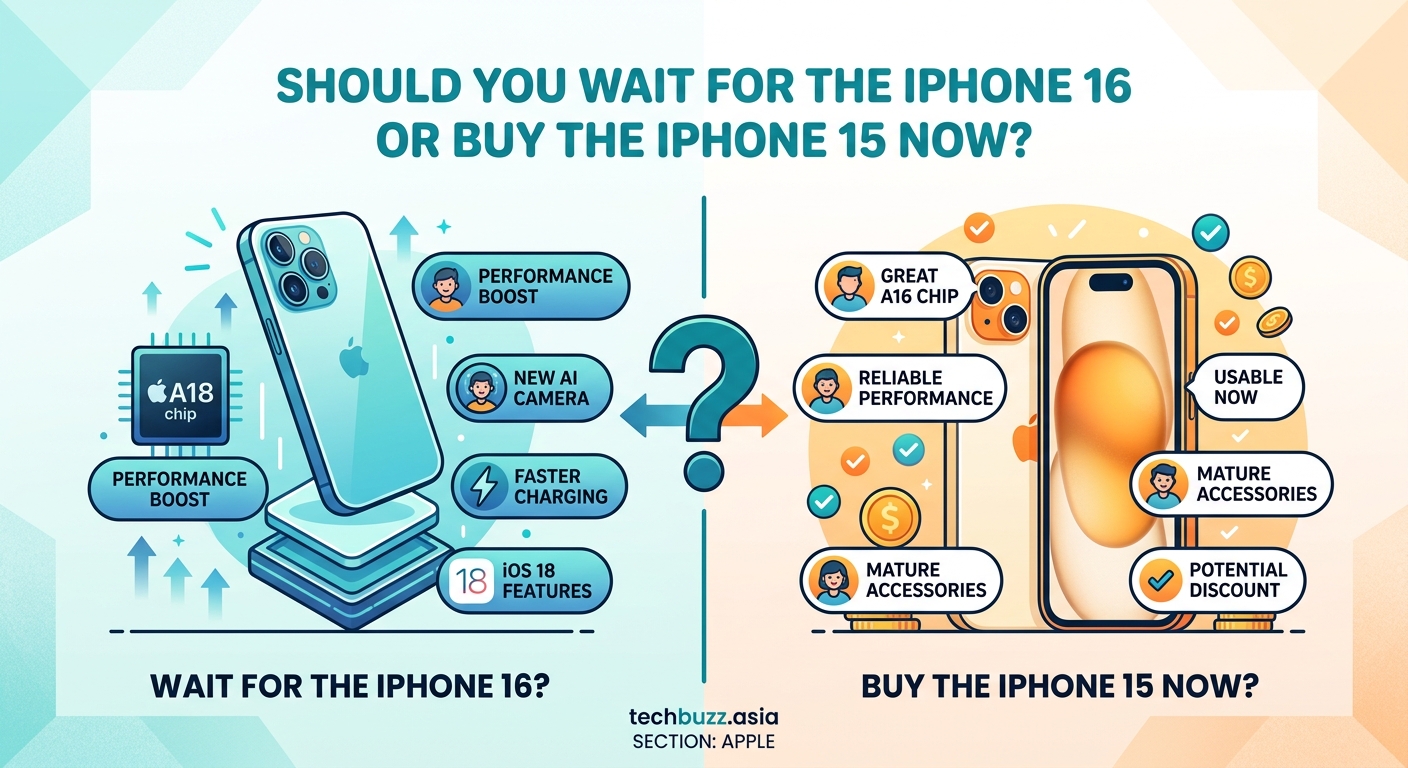
The iPhone 15 offers excellent value right now with proven performance, strong cameras, and discounts from retailers. The iPhone 16 will bring AI features, better battery life, and improved cameras when it launches in September 2026. Buy the iPhone 15 if you need a phone immediately or want to save money. Wait for the iPhone 16 if your current phone works fine and you want the newest technology for longer software support.
What we know about the iPhone 16 so far
Apple typically announces new iPhones in September, following a pattern they’ve maintained for over a decade. The iPhone 16 should arrive around mid-September 2026, with pre-orders starting the Friday after the announcement and shipping beginning the following week.
Leaked information and supply chain reports suggest several meaningful upgrades. The standard iPhone 16 models will likely receive the Action button that debuted on the iPhone 15 Pro. This programmable button replaces the traditional mute switch and can trigger shortcuts, open apps, or control smart home devices.
Camera improvements appear significant this year. Reports indicate a new 48-megapixel ultra-wide camera for the Pro models, up from the current 12-megapixel sensor. The standard iPhone 16 might also get the telephoto lens that’s currently exclusive to Pro models, giving budget-conscious buyers access to optical zoom.
Apple’s A18 chip will power the new phones, built on an updated manufacturing process that should deliver better battery efficiency. Early benchmarks suggest a 15-20% performance improvement over the A17 Pro, though real-world differences might feel less dramatic during daily use.
The biggest change involves Apple Intelligence, the company’s suite of AI features announced at their recent developer conference. These tools include smarter Siri responses, real-time photo editing suggestions, and automated message summaries. The iPhone 16 will ship with these features built in, while iPhone 15 Pro owners will receive them through software updates.
Current iPhone 15 pricing and deals
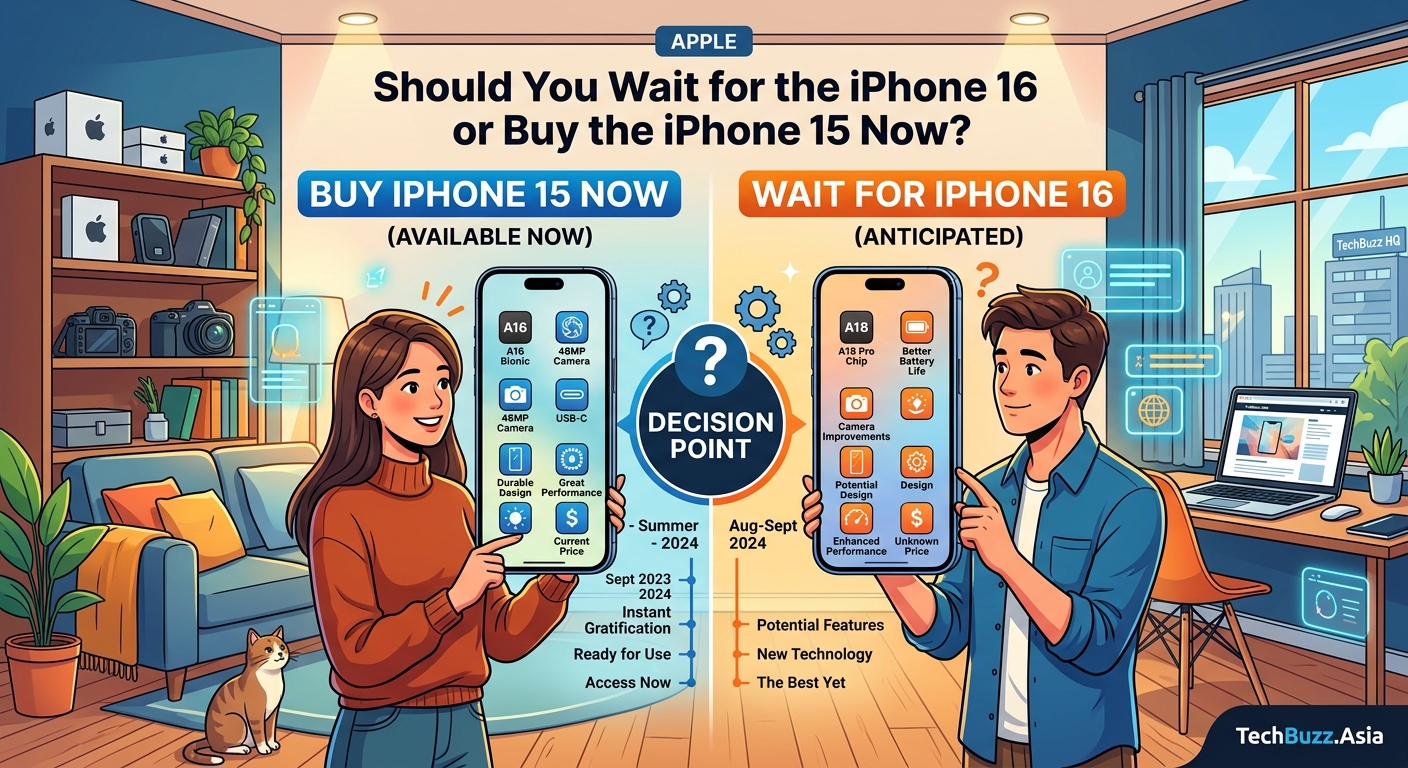
The iPhone 15 launched at $799 for the base 128GB model, but you won’t pay that price today if you shop around. Major carriers like Verizon, AT&T, and T-Mobile offer trade-in deals that can slash hundreds off the retail price, especially if you’re switching providers or adding a new line.
Best Buy frequently runs promotions that combine carrier deals with their own discounts. Last month, they offered $200 off any iPhone 15 with activation, stacking on top of trade-in credits. Target sometimes includes gift cards with iPhone purchases, effectively reducing your total cost.
Apple’s own store provides trade-in values up to $650 for older iPhones in good condition. An iPhone 12 Pro in excellent shape might fetch $400, bringing your iPhone 15 cost down to $399 before taxes. Refurbished iPhone 15 models from Apple’s certified program save another 10-15% and include the same one-year warranty as new devices.
Here’s what you can expect to pay right now:
| Model | Retail Price | Typical Street Price | With Trade-In |
|---|---|---|---|
| iPhone 15 128GB | $799 | $699-749 | $399-549 |
| iPhone 15 256GB | $899 | $799-849 | $499-649 |
| iPhone 15 Plus 128GB | $899 | $799-849 | $499-649 |
| iPhone 15 Pro 128GB | $999 | $899-949 | $599-749 |
| iPhone 15 Pro Max 256GB | $1,199 | $1,099-1,149 | $799-949 |
Third-party retailers like Amazon and Walmart occasionally beat these prices during major shopping events. Memorial Day, Fourth of July, and back-to-school sales typically bring iPhone discounts.
How to decide if you should buy iPhone 15 or wait for iPhone 16
Your current phone’s condition matters more than any feature comparison. If your battery health sits below 80%, apps crash regularly, or the screen has significant damage, waiting another four months will frustrate you daily. A phone that barely lasts until dinner makes every day harder than it needs to be.
Financial timing plays a major role in this decision. The iPhone 16 will launch at the same $799 starting price, but you won’t find discounts for months. Early adopters pay full retail while iPhone 15 buyers today benefit from competitive pricing and promotions. That $200 difference buys a quality case, AppleCare coverage, or several months of your streaming subscriptions.
Consider your typical upgrade cycle. If you keep phones for three to four years, the iPhone 16’s newer processor and extended software support make sense. Apple typically provides iOS updates for six years after launch, meaning the iPhone 16 will receive updates through 2032 compared to the iPhone 15’s support ending in 2031. One extra year of security patches and new features adds value for long-term owners.
Your interest in AI features should influence this choice. Apple Intelligence requires significant processing power, which is why older iPhones won’t support it fully. The iPhone 15 Pro gets most features through updates, but the standard iPhone 15 lacks the necessary neural engine capabilities. If AI-powered photo editing and smart assistants matter to you, either buy the iPhone 15 Pro now or wait for the iPhone 16.
Photography priorities also factor into this decision. The iPhone 15 already takes excellent photos in most conditions, with a 48-megapixel main camera and improved night mode. Professional photographers and content creators might want the iPhone 16’s rumored camera upgrades, but casual users won’t notice much difference when sharing photos on social media or printing 4×6 snapshots.
Three scenarios where buying iPhone 15 now makes sense
-
Your phone died unexpectedly. Broken screens, water damage, or complete hardware failure don’t wait for Apple’s release schedule. You need a working phone for work calls, navigation, mobile banking, and staying connected with family. Living without a smartphone for four months isn’t realistic in 2026.
-
You’re traveling internationally soon. Setting up a new phone takes time, even with Apple’s migration tools. You’ll want several weeks to transfer data, download apps, adjust settings, and ensure everything works before boarding a plane. Starting a two-week European vacation with a brand-new phone you barely understand leads to missed photos, navigation problems, and unnecessary stress.
-
Current discounts exceed iPhone 16 launch pricing. When carrier deals and trade-in credits bring your total cost below $500 for an iPhone 15, you’re getting tremendous value. The iPhone 16 won’t see similar pricing until next spring at the earliest, meaning you’d wait 10-12 months to match today’s deals while using a phone that frustrates you daily.
Three scenarios where waiting for iPhone 16 makes sense
Your current phone works perfectly fine. Battery health above 85%, smooth performance, and no physical damage mean you can comfortably wait until September. Four months passes faster than you think, especially when your phone handles everything you need without issues.
You want the absolute latest technology for maximum longevity. Buying the newest model gives you an extra year before your phone feels outdated. This matters if you typically keep devices for four or five years, as the iPhone 16 will feel current through 2030 while the iPhone 15 starts showing its age by 2029.
Photography or videography drives your phone choice. Content creators who rely on their phone for professional work benefit from the latest camera sensors and processing capabilities. The rumored 48-megapixel ultra-wide camera and improved low-light performance could meaningfully improve your output quality, potentially paying for itself through better client work or social media engagement.
If your phone works fine and you’re not in a rush, waiting for the iPhone 16 gives you the newest technology and longest software support. But if you need a phone now or find a great deal on the iPhone 15, you won’t regret buying a device that already performs excellently.
What happens to iPhone 15 prices when iPhone 16 launches
Apple immediately drops the iPhone 15 price by $100 when the iPhone 16 arrives, moving the starting price from $799 to $699. The iPhone 15 Plus sees a similar reduction. Apple typically discontinues Pro models entirely, removing them from official stores but leaving plenty of stock at third-party retailers.
Carrier deals intensify after the new launch as companies clear remaining inventory. Last year, the iPhone 14 saw aggressive promotions offering free phones with trade-ins and new lines. Similar deals will appear for the iPhone 15, potentially making it a bargain for buyers who don’t need the absolute latest features.
Third-party retailers like Best Buy and Amazon compete hard during this period, often beating Apple’s official pricing by another $50-100. Refurbished iPhone 15 models flood the market as early iPhone 16 adopters trade in their year-old phones, creating opportunities for significant savings.
The sweet spot for iPhone 15 deals typically arrives 4-6 weeks after the iPhone 16 launch, once retailers have clear pictures of their inventory levels and Apple’s official price cuts take effect. Black Friday in November offers another round of aggressive discounts, sometimes bringing the iPhone 15 down to $499 or less with the right combination of promotions.
However, you’ll face limited color and storage options as popular configurations sell out. The standard black and white models stick around longest, while limited edition colors disappear within weeks. If you want a specific storage capacity or color, buying earlier in the cycle makes sense.
Battery life and performance differences you’ll actually notice
The iPhone 15 already delivers all-day battery life for most users, typically lasting 15-18 hours with moderate use. That covers morning emails, lunch-break social media, afternoon video calls, and evening streaming without reaching for a charger. Heavy users who game extensively or shoot lots of video might need a midday top-up, but that’s true of nearly every smartphone.
Battery improvements in the iPhone 16 will come primarily from the more efficient A18 chip rather than larger batteries. Expect 10-15% better battery life in real-world use, translating to an extra hour or two per charge. That difference matters if you regularly end days at 5% battery, but won’t transform your experience if you currently finish with 30% remaining.
Performance differences between the A17 chip in iPhone 15 Pro and the upcoming A18 will be minimal for everyday tasks. Apps open instantly on both phones. Web browsing feels equally smooth. Even demanding games run at high frame rates without stuttering. You’ll only notice performance gaps in specific scenarios like exporting 4K video or running complex photo filters, tasks that might take 12 seconds instead of 10.
The standard iPhone 15 uses the previous-generation A16 chip, which still outperforms most Android competitors but lags behind the Pro models. If you’re upgrading from an iPhone 11 or older, even the standard iPhone 15 feels blazingly fast. The performance jump from older phones to any current iPhone matters far more than the incremental improvements between iPhone 15 and 16.
Why your smartphone battery degrades faster than it should affects your long-term satisfaction more than launch-day specifications. Proper charging habits and avoiding extreme temperatures preserve battery health regardless of which model you choose.
Camera capabilities that separate these models
The iPhone 15’s 48-megapixel main camera captures stunning photos in good lighting, with accurate colors and impressive detail. Night mode works well in low light, though you’ll still see some noise in very dark scenes. The ultra-wide camera handles landscapes and group shots effectively, while the front camera takes solid selfies for video calls and social media.
iPhone 15 Pro adds a telephoto lens with 3x optical zoom, useful for portraits and distant subjects. The ProRAW format gives serious photographers more editing flexibility, though most users never enable it. Video capabilities match or exceed dedicated cameras for casual use, with 4K recording at 60fps and excellent stabilization.
Rumored iPhone 16 improvements focus on the ultra-wide camera, jumping from 12 to 48 megapixels on Pro models. This upgrade helps with macro photography and wide-angle shots in challenging lighting. The standard iPhone 16 might inherit the telephoto lens from current Pro models, bringing optical zoom to the base tier for the first time.
Apple’s computational photography continues improving with each generation, but the differences become harder to spot. Comparing iPhone 15 and iPhone 14 photos side-by-side requires careful examination to identify improvements. The same will likely hold true for iPhone 16, with better processing producing slightly cleaner images that look nearly identical when viewed on phone screens or shared online.
Professional photographers and content creators benefit from cutting-edge camera hardware. Everyone else gets excellent photos from any recent iPhone, with differences that matter more in technical analysis than actual use. If photography drives your upgrade decision, wait for the iPhone 16. If you just want great vacation photos and sharp video calls, the iPhone 15 delivers completely.
Software support and future iOS updates
Apple provides iOS updates for approximately six years after a phone’s release. The iPhone 15 launched with iOS 17 and should receive updates through iOS 23, arriving in 2029. The iPhone 16 will launch with iOS 18 and likely receive support through iOS 24 in 2030. That one-year difference matters if you plan to keep your phone for five or six years.
Early iOS updates bring the most noticeable features and improvements. Later updates focus primarily on security patches and minor refinements. An iPhone 15 will feel current and capable through 2027-2028, after which it starts missing new features even though it still receives security updates.
What happens when tech giants stop supporting your device affects your security and app compatibility. Older phones without current iOS versions can’t run the latest app updates, gradually losing functionality for banking apps, social media platforms, and work tools.
The practical difference between six and seven years of support seems significant on paper but rarely matters in reality. Most people upgrade phones every three to four years, either because they want new features or because battery degradation makes their current phone frustrating to use. Very few people actually use phones for their entire support lifecycle.
If you typically keep phones for two to three years, software support differences between iPhone 15 and 16 are irrelevant. Both phones will receive all major updates during your ownership period. If you’re the type who keeps phones until they literally stop working, the iPhone 16’s extra year of support provides meaningful value.
Making the final call on your purchase timing
Your decision ultimately comes down to urgency, budget, and priorities. Need a phone immediately? Buy the iPhone 15 now and enjoy months of use with a device that performs excellently. Can you wait comfortably? The iPhone 16 brings newer technology and longer support.
Here’s a practical framework for making this choice:
- Current phone battery health below 80%: Buy iPhone 15 now
- Current phone works fine: Wait for iPhone 16
- Budget under $600 total: Buy iPhone 15 with current deals
- Want latest AI features: Wait for iPhone 16 or buy iPhone 15 Pro
- Keep phones 2-3 years: Either option works great
- Keep phones 4+ years: Wait for iPhone 16
- Professional photographer: Wait for iPhone 16
- Casual photo taker: Buy iPhone 15 now
The iPhone 15 represents mature, proven technology at increasingly attractive prices. You know exactly what you’re getting, with months of real-world testing confirming its capabilities. The iPhone 16 promises improvements that sound appealing but remain unproven until actual devices ship.
Consider your past upgrade patterns. If you’ve historically upgraded every two years regardless of your intentions, buying the newest model provides minimal benefit. If you genuinely keep phones until they die, maximizing your purchase with the latest model makes financial sense.
Your phone, your timeline, your choice
Choosing between the iPhone 15 and iPhone 16 doesn’t require perfect timing or insider knowledge. It requires honest assessment of your current situation and realistic expectations about how you actually use your phone.
The iPhone 15 works beautifully right now, takes fantastic photos, and costs less every week as retailers compete for your business. The iPhone 16 will bring improvements that sound exciting in press releases but might not change your daily experience in meaningful ways.
Buy what makes sense for your life today. Your phone should make things easier, not add stress about whether you made the optimal choice. Both options will serve you well for years, keeping you connected, productive, and entertained through whatever comes next.

Post Comment