What Happened to E-Readers? The Surprising Comeback Story
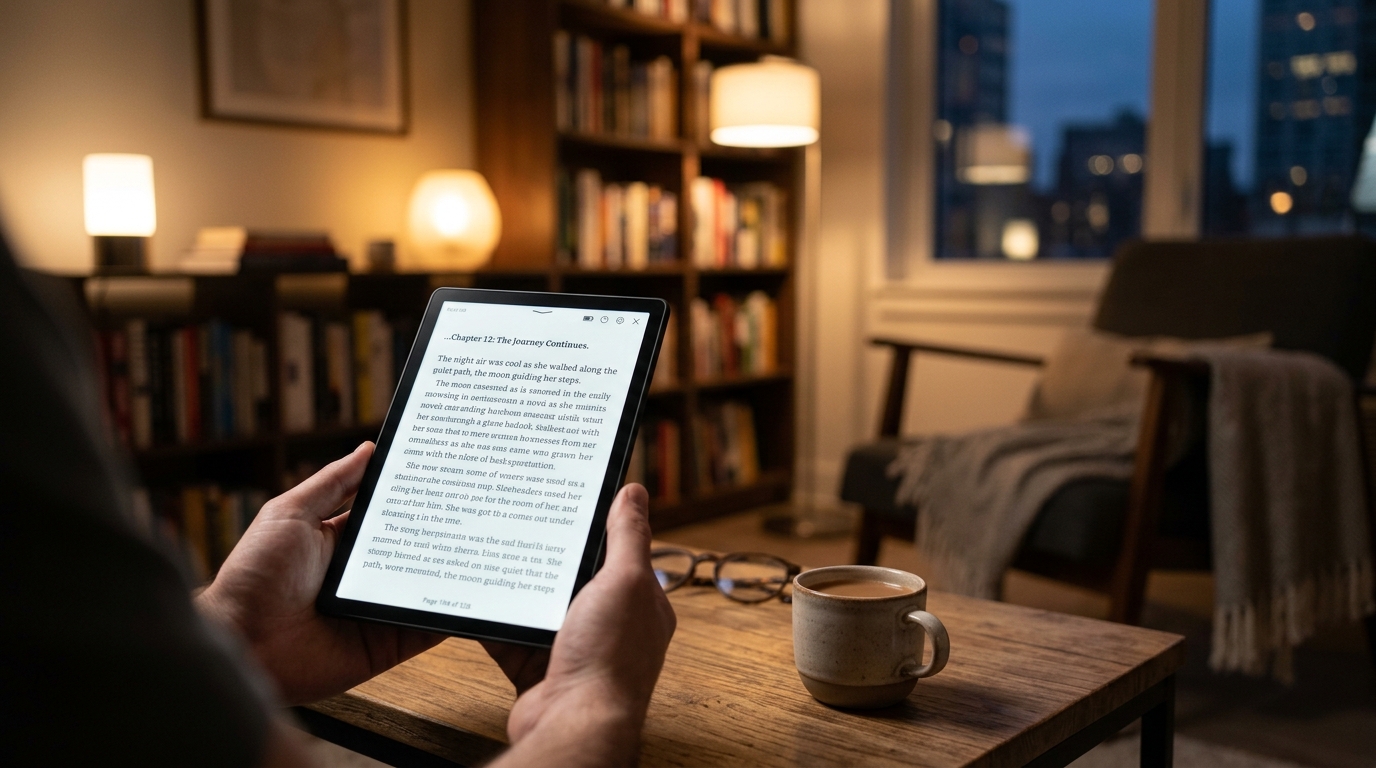
Remember when everyone said tablets would kill e-readers? The prediction seemed obvious. Why carry a device that only displays books when your iPad could do everything? Yet here we are in 2026, and e-readers are not just surviving but actually growing. Amazon’s Kindle lineup keeps expanding, Kobo releases new models annually, and even niche brands are finding loyal audiences. The story of what happened to e-readers isn’t about decline. It’s about finding the right people who value doing one thing exceptionally well.
E-readers survived the tablet revolution by doubling down on their strengths: eye-friendly displays, weeks-long battery life, and distraction-free reading. After initial market confusion in the early 2010s, dedicated readers found their niche among serious book lovers who value focus over multitasking. Today’s e-reader market is smaller but healthier, with devices offering color screens, waterproofing, and audiobook integration while maintaining their core reading experience.
The Rise and Supposed Fall
E-readers exploded onto the scene in 2007 when Amazon launched the first Kindle. Sony had tried earlier with the Librie and Reader, but Amazon’s combination of e-ink technology and seamless book purchasing changed everything. By 2010, nearly every tech company wanted a piece of the action.
Barnes & Noble released the Nook. Sony kept pushing their Reader line. Even smaller companies like Kobo carved out international markets. The devices sold millions. Publishers panicked about digital disruption. Bookstores worried about their future.
Then tablets arrived. The iPad launched in 2010, offering color screens, apps, games, and yes, book reading through apps like Kindle and iBooks. Android tablets flooded the market at every price point. Suddenly, carrying a single-purpose device seemed outdated.
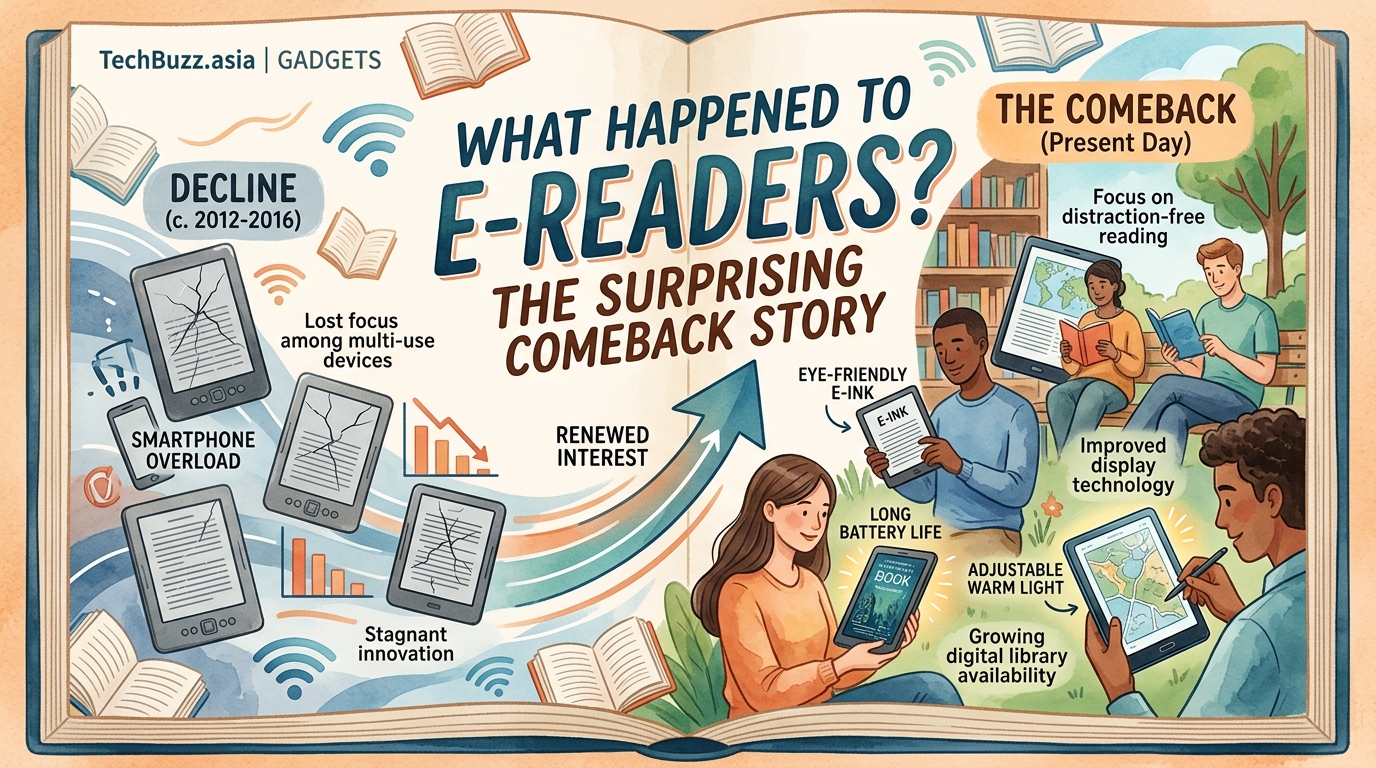
Sales of e-readers plateaued around 2011 and started declining by 2012. Tech journalists wrote obituaries. Sony exited the market in 2014. It looked like the prediction was coming true.
Why E-Readers Didn’t Actually Die
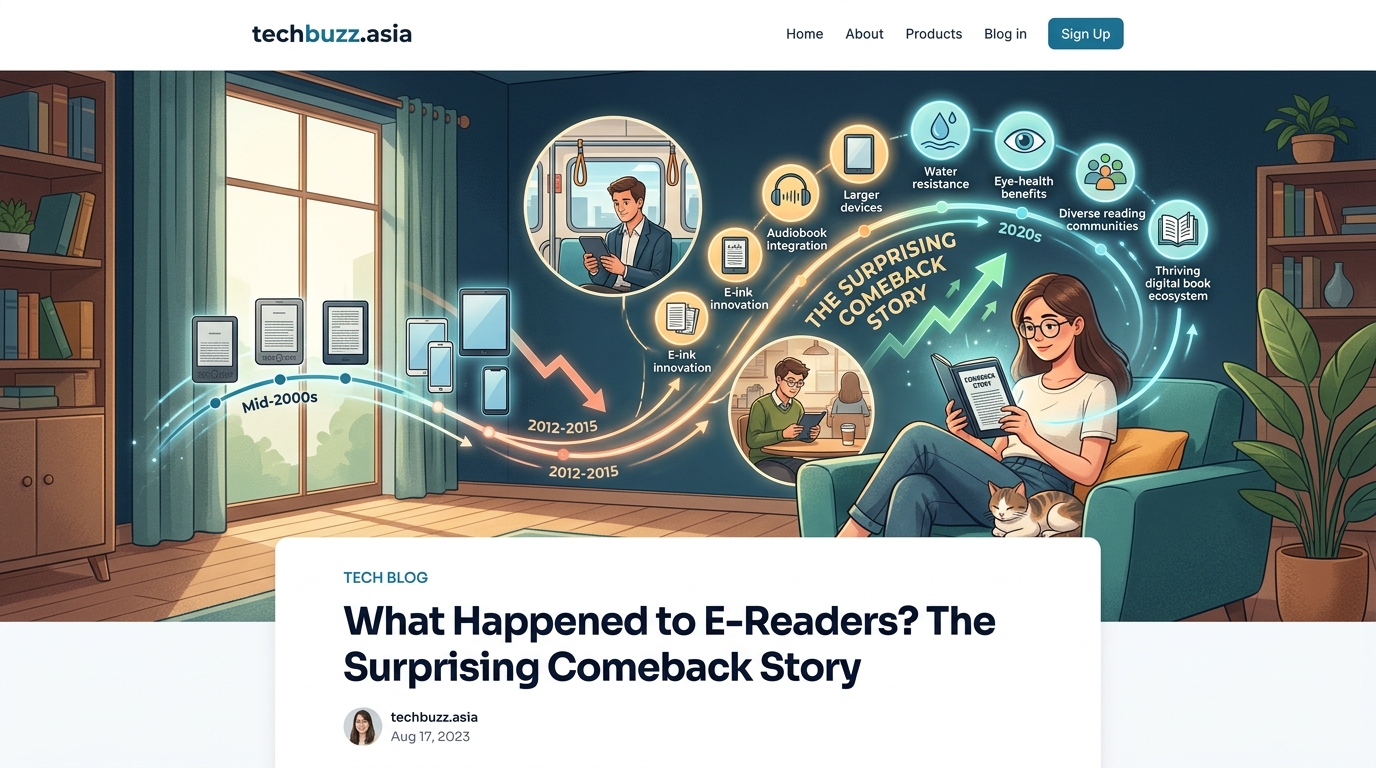
The death of e-readers was greatly exaggerated. What actually happened was market correction, not extinction. People who bought e-readers on impulse or curiosity switched to tablets. But a core group of readers discovered something important: tablets are terrible for long-form reading.
E-ink displays mimic paper. They don’t emit light directly into your eyes like LCD or OLED screens. You can read for hours without the eye strain that comes from staring at your phone. Why your smartphone battery degrades faster than it should partly explains why tablets need charging daily, while e-readers last weeks on a single charge.
Battery life matters more than people initially thought. Taking a tablet on vacation means packing another charger. An e-reader just goes in your bag. You might charge it once during a two-week trip.
The distraction factor proved crucial. Tablets constantly tempt you with notifications, social media, and email. E-readers do one thing. That limitation became their greatest strength for people who actually wanted to read, not just own books.
The Quiet Comeback Begins
Around 2015, something shifted. E-reader sales stabilized. Amazon kept releasing new Kindles because they kept selling. The Paperwhite became one of their most consistent products, updated regularly with incremental improvements that mattered to readers.
Kobo found success outside the United States, particularly in markets where Amazon’s ecosystem wasn’t dominant. Their partnership with independent bookstores created an alternative to Amazon’s monopoly. Readers who cared about supporting local businesses had an option.
The devices got better in ways that mattered. Waterproofing meant reading in the bath or by the pool without anxiety. Higher resolution screens made text crisper. Adjustable warm lighting reduced blue light for nighttime reading. Storage increased to hold thousands of books.
Audiobook integration blurred the line between reading and listening. You could switch seamlessly between formats during your commute or workout. The devices weren’t trying to be tablets anymore. They were becoming better reading devices.
Who Actually Buys E-Readers Today
The current e-reader market serves specific audiences who know exactly what they want. These aren’t casual readers picking up a few bestsellers per year. They’re people who read 20, 50, or 100 books annually.
Commuters represent a huge segment. Reading on a phone works for short articles, but a 300-page novel needs a better screen. E-readers fit in bags, survive jostling, and don’t drain battery during long trips.
Travelers love the space savings. Packing five physical books for a two-week vacation takes up half a suitcase. An e-reader weighs less than one paperback and holds your entire library.
Students and researchers appreciate annotation features. Highlighting, note-taking, and searching across multiple books helps with studying and writing. Some academic publishers offer textbooks in formats that work better on e-readers than tablets.
People with vision issues benefit from adjustable text size and font choices. Making text larger on a phone means constant scrolling. E-readers handle large text gracefully across their bigger screens.
How Modern E-Readers Evolved
Today’s e-readers would seem magical to someone using a 2010 Kindle. The core technology remains e-ink, but everything else improved dramatically.
Display Technology Advances
Color e-ink finally arrived. Devices like the Kobo Libra Colour and Kindle Colorsoft can display book covers, comics, and illustrated content in color while maintaining the eye-friendly benefits of e-ink. The colors aren’t as vibrant as tablets, but they don’t need to be for most reading.
Screen sizes diversified. You can buy pocket-sized 6-inch readers, standard 7-inch models, or tablet-sized 10-inch devices for comics and PDFs. Some manufacturers offer multiple sizes of the same model to match different preferences.
Resolution reached the point where individual pixels disappear. At 300 pixels per inch, text looks printed rather than digital. Some premium models push even higher for technical documents and manga.
Software and Features
Library integration improved massively. Many e-readers now connect directly to public library systems through apps like Libby or OverDrive. You can borrow books without leaving your couch and they automatically return when due.
Reading statistics became surprisingly popular. Devices track your reading speed, time spent, and books finished. Some readers find this gamification motivating, though others ignore it completely.
Cloud syncing works across devices. Start reading on your e-reader, continue on your phone during lunch, and pick up on your tablet at home. Your place, highlights, and notes sync automatically.
Format support expanded. Beyond proprietary formats like Amazon’s AZW, many e-readers handle EPUB, PDF, MOBI, and even CBZ/CBR comic formats. Some convert formats automatically.
The Current Market Landscape
Amazon still dominates, but the market is healthier than the monopoly years. Competition drives innovation rather than just price wars.
| Brand | Strengths | Best For | Ecosystem |
|---|---|---|---|
| Amazon Kindle | Largest bookstore, best integration | Amazon customers, casual readers | Locked to Amazon |
| Kobo | Open formats, library support | Format flexibility, international users | Kobo store, sideloading |
| Boox | Android-based, note-taking | Power users, students | Any Android app |
| PocketBook | Format support, customization | Tech-savvy readers | Multiple stores |
| Remarkable | Writing and sketching | Note-takers, artists | Subscription-based |
Prices range from under $100 for basic models to over $400 for premium devices with large screens and advanced features. The mid-range around $150 to $200 offers the best value for most readers.
Used and refurbished markets thrive because e-readers last years. A five-year-old Kindle Paperwhite still works perfectly fine for reading, even if it lacks newer features. What happens when tech giants stop supporting your device matters less for e-readers because the core function doesn’t require updates.
Common Mistakes When Choosing an E-Reader
People still make predictable errors when buying their first e-reader. Avoiding these saves money and frustration.
Buying the cheapest model without checking features. Base models often lack lighting, making them useless for reading in bed. Spending $30 more usually gets you essential features you’ll use daily.
Ignoring ecosystem lock-in. Amazon’s Kindle only reads Amazon books easily. If you already own EPUB books or use library services, a Kobo or open-format reader makes more sense.
Choosing screen size based on tablet experience. A 6-inch e-reader feels bigger than a 6-inch phone because you’re not juggling apps and keyboards. Most readers find 6 to 7 inches perfect. Bigger screens help with PDFs and comics but make the device less portable.
Forgetting about library borrowing. If your local library offers digital lending, make sure your e-reader supports it. Amazon’s library support works but has limitations compared to devices that run Libby natively.
Overlooking waterproofing. Even if you don’t plan to read in the bath, accidents happen. A waterproof rating provides peace of mind around drinks, pools, and unexpected rain.
Setting Up Your First E-Reader for Success
Getting started right makes the difference between loving your e-reader and abandoning it in a drawer. Follow these steps for the best experience.
-
Charge fully before first use. E-readers ship partially charged but starting with a full battery calibrates the battery indicator and ensures you won’t run out mid-setup.
-
Connect to Wi-Fi and update firmware immediately. Manufacturers fix bugs and add features through updates. Getting current before loading books prevents weird compatibility issues.
-
Configure reading preferences before buying books. Set your preferred font, size, margins, and line spacing. Reading a sample book helps dial in settings that feel comfortable for hours of reading.
-
Organize your library from the start. Create collections or folders by genre, author, or reading status. Doing this with five books is easy. Doing it with 500 books is overwhelming.
-
Test library borrowing before traveling. Download a library book at home to ensure the process works. Troubleshooting connection issues is easier with good Wi-Fi and time to spare.
-
Adjust lighting for different environments. Save presets for bright daylight, dim rooms, and nighttime reading. Many e-readers let you schedule automatic adjustments.
Start with books you’ve already read and loved. Familiar content lets you focus on adjusting settings and getting comfortable with the device rather than trying to follow a new plot while learning navigation.
Why the Comeback Matters for Readers
The survival and growth of e-readers proves that specialized devices still have a place. Not everything needs to be a smartphone or tablet. Sometimes doing one thing really well beats doing everything adequately.
The reading experience matters. People who read regularly notice the difference between reading on an e-reader versus a backlit screen. Eye comfort affects how much you read and how much you enjoy it.
Battery anxiety disappears. You stop thinking about charging and just read. That mental freedom sounds small but changes how you interact with the device.
Focus improves without notifications. Your e-reader never buzzes with a text message or email. It just sits there, waiting for you to read. That simplicity feels increasingly valuable in our distracted world.
Physical bookstores and libraries adapt rather than disappear. E-readers complement physical books instead of replacing them. Many avid readers own both, choosing format based on context rather than ideology.
Features Worth Paying Extra For
Not all e-reader features justify their cost, but some upgrades genuinely improve daily use.
-
Built-in lighting: Essential unless you only read in bright daylight. Front-lit e-ink displays work better than reading by lamp.
-
Warm light adjustment: Reduces blue light for evening reading and looks more natural than cool white light.
-
Waterproofing: Provides flexibility to read anywhere without stress about accidents.
-
Larger storage: Matters if you read comics, graphic novels, or keep a massive library downloaded. Text-only readers rarely need more than 8GB.
-
Page-turn buttons: Physical buttons feel better than touchscreen tapping for some readers, especially one-handed reading.
-
Cellular connectivity: Rarely worth it. Wi-Fi works fine for downloading books at home, and most people don’t buy books spontaneously while hiking.
The Future Looks Surprisingly Bright
E-readers aren’t going anywhere. The market matured into a sustainable niche that serves millions of dedicated readers worldwide. Companies keep investing in research and development because customers keep buying.
Color e-ink will improve. Current implementations work but have limitations. Future generations will offer better color saturation and faster refresh rates for a more dynamic reading experience.
Note-taking integration continues evolving. Devices that combine reading and writing appeal to students, researchers, and professionals who annotate heavily. The technology keeps getting better at recognizing handwriting and converting it to searchable text.
Subscription services grow alongside device sales. Kindle Unlimited, Kobo Plus, and similar services offer all-you-can-read models that work well for voracious readers. The economics make sense when you read multiple books monthly.
Is foldable technology finally ready for mainstream adoption? might eventually impact e-readers, though the benefits seem less clear than for phones. A foldable e-reader could offer a larger screen in a compact form, but the added complexity and cost might not appeal to readers who value simplicity.
E-Readers Found Their People
The story of what happened to e-readers isn’t about technology failing or succeeding. It’s about a product finding its true audience after initial hype faded. The people who bought e-readers because they were trendy moved on. The people who bought them because they love reading stuck around.
That core audience proved large enough and loyal enough to sustain a healthy market. Manufacturers stopped trying to make e-readers do everything and focused on making them perfect for reading. Readers rewarded that focus with continued purchases and genuine enthusiasm.
If you read regularly and haven’t tried a modern e-reader, you might be surprised how much better the experience feels compared to phones or tablets. If you tried an e-reader years ago and found it lacking, current models address most old complaints. The technology matured. The ecosystems improved. The devices just work.
E-readers survived by being excellent at something specific rather than mediocre at everything. That’s a lesson worth remembering in a world that constantly pushes multitasking and convergence. Sometimes the best tool is the one that does exactly what you need and nothing more.

Post Comment