AirPods Pro vs AirPods Max: Which Apple Headphones Should You Buy?
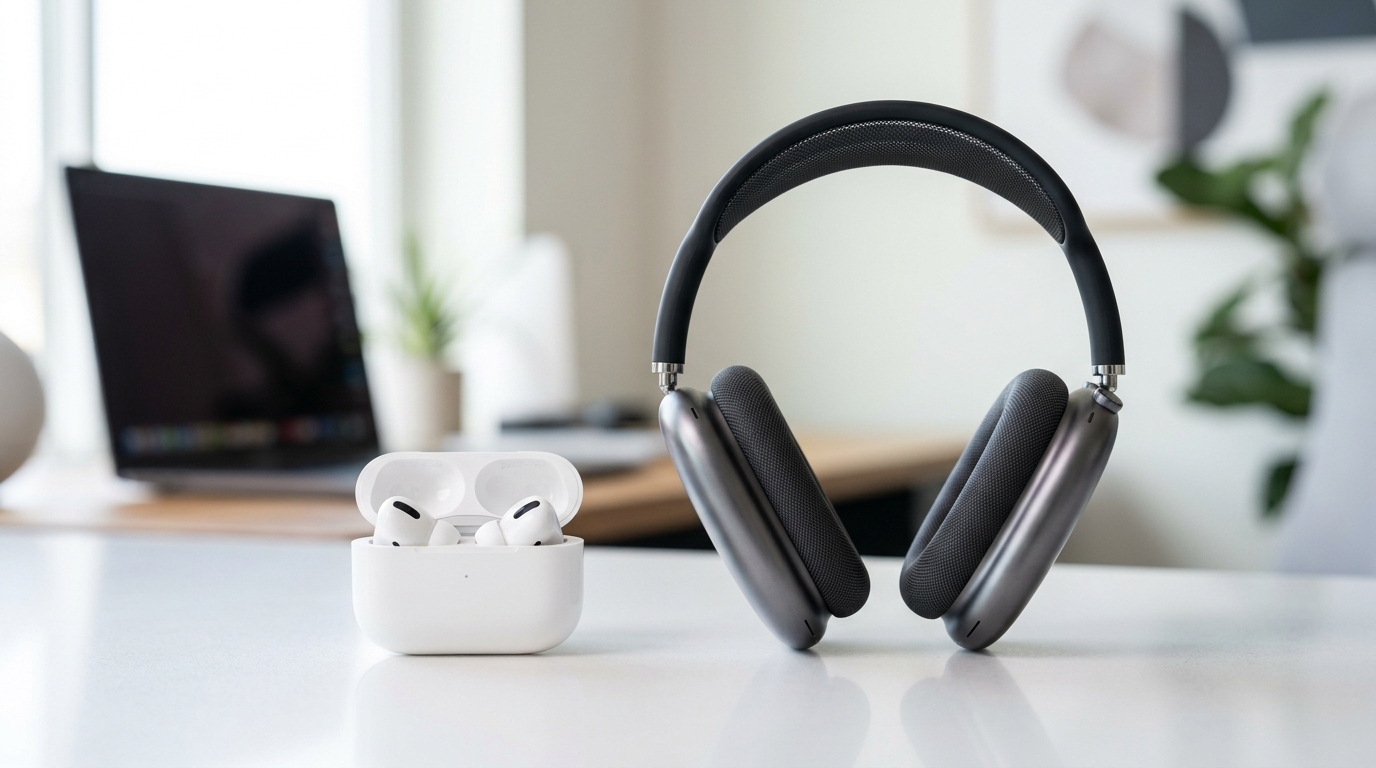
Apple’s premium audio lineup puts two very different products in front of you. The AirPods Pro offer portability and convenience in a tiny package. The AirPods Max deliver room-filling sound in a luxury over-ear design. Both cost serious money, and choosing between them means understanding what you actually need from your headphones.
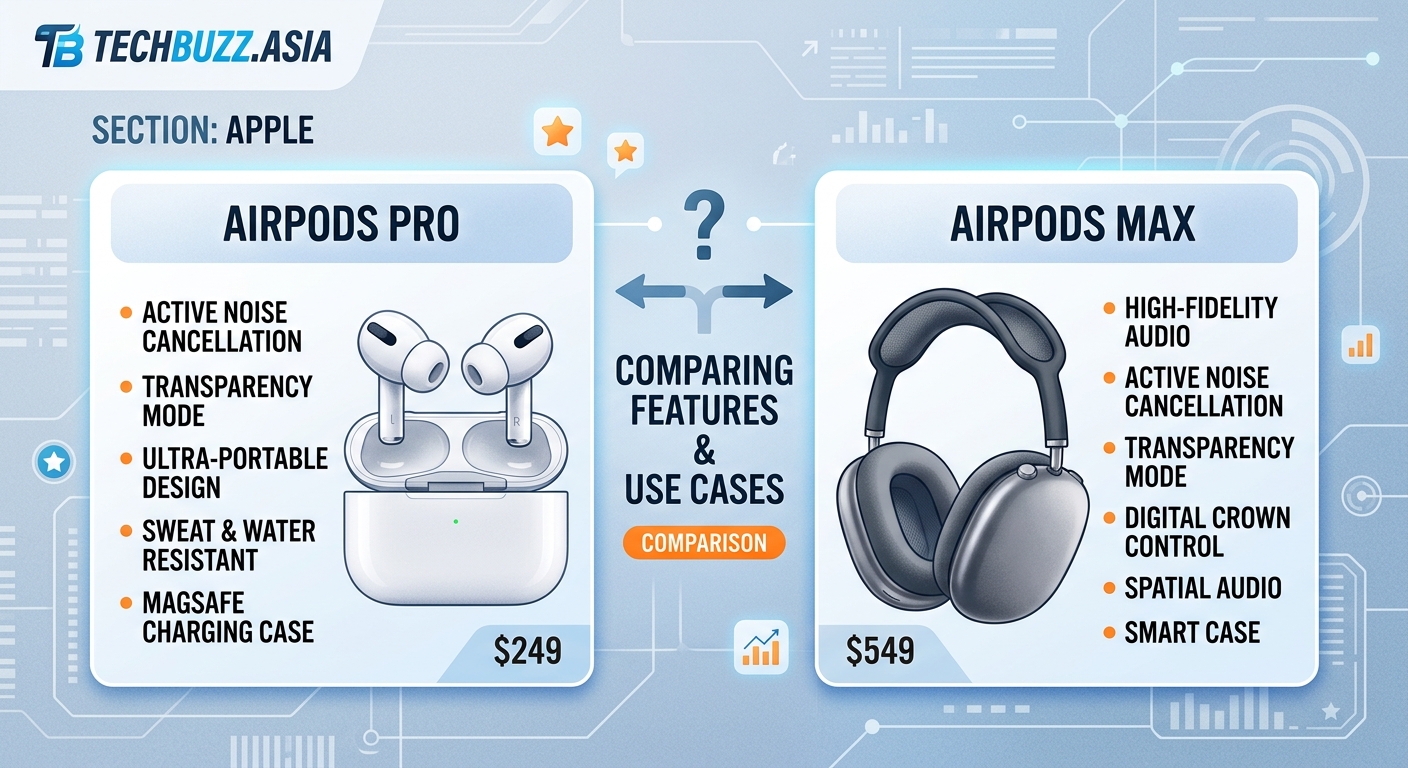
AirPods Pro excel at portability, active noise cancellation, and everyday convenience for $249, fitting easily into any pocket. AirPods Max deliver superior sound quality and premium build for $549 but sacrifice portability. Your choice depends on whether you prioritize mobility and versatility or immersive audio and long listening sessions. Both integrate seamlessly with Apple devices, but serve distinctly different use cases.
Design and Comfort for Different Lifestyles
The physical differences between these two products shape everything about how you’ll use them.
AirPods Pro weigh just 5.3 grams per earbud. You can carry them anywhere without thinking twice. The charging case slips into your pocket, your gym bag, or that tiny compartment in your backpack. You’ll forget they’re there until you need them.
AirPods Max weigh 385 grams. That’s nearly 73 times heavier than a single Pro earbud. The weight sits on your head, distributed across a mesh canopy and memory foam ear cushions. Some people love the substantial feel. Others find them too heavy for extended wear.
The Pro’s silicone ear tips create a seal inside your ear canal. Apple includes four sizes to help you find the right fit. The Ear Tip Fit Test in iOS confirms whether you’ve got a proper seal. This matters for sound quality and noise cancellation.
The Max’s over-ear design completely surrounds your ears. The cushions use memory foam wrapped in breathable mesh. They don’t press into your ears like on-ear headphones. But they do trap heat. Summer commutes can get sweaty.
Portability becomes the deciding factor for many people. You can toss the Pro into any bag without worrying about damage. The Max come with a Smart Case that protects the ear cushions but leaves the headband exposed. The case doesn’t fold the headphones. It just covers them. Traveling with the Max means dedicating significant bag space to them.
Sound Quality Differences That Matter
Both products sound excellent, but they excel in different ways.
The AirPods Max use 40mm dynamic drivers. Larger drivers typically move more air and produce fuller bass. Apple’s computational audio processing shapes the sound in real time. The result is rich, detailed audio with impressive bass extension for closed-back headphones.
Classical music reveals the Max’s strengths. Orchestral pieces have space to breathe. You can pick out individual instruments in complex passages. The soundstage feels wider than most closed-back headphones manage.
The AirPods Pro use 11mm drivers. Much smaller, but Apple compensates with Adaptive EQ that adjusts sound based on how the earbuds fit in your ears. The bass punches harder than you’d expect from such small drivers. The sound signature leans slightly warm, making vocals sound natural and engaging.
For podcasts and audiobooks, the Pro actually work better. The smaller form factor disappears during long listening sessions. You’re not constantly aware of wearing headphones. The Max’s superior drivers don’t add much value when you’re just listening to people talk.
If you care deeply about audio quality and plan to sit down for focused listening sessions, the AirPods Max justify their higher price. For everything else, the Pro deliver 90% of the experience in a fraction of the size.
Both support Spatial Audio with dynamic head tracking. This feature makes movies and supported music feel three-dimensional. Turn your head, and the sound stays anchored to your device’s screen. It’s genuinely impressive on both products, though the Max’s larger drivers make the effect more convincing.
Noise Cancellation Performance Compared
Active noise cancellation (ANC) is a major selling point for both products.
The AirPods Max use eight microphones for ANC. Six face outward to detect environmental noise. Two face inward to measure what you’re actually hearing. Apple’s H1 chip processes this data 200 times per second, adjusting the cancellation in real time.
The result silences airplane cabin noise almost completely. Low-frequency rumble disappears. Mid-frequency sounds like conversation get significantly reduced. High-frequency noises still peek through occasionally, but the Max rank among the best ANC headphones available.
The AirPods Pro use six microphones. Three face outward, three face inward. The same H1 chip runs the show. The noise cancellation is excellent, especially considering the earbuds’ tiny size. They handle airplane noise, traffic sounds, and office chatter effectively.
The key difference comes down to physics. Over-ear headphones create a physical barrier around your entire ear. This passive isolation works alongside the active cancellation. In-ear headphones rely more heavily on the electronic cancellation and the seal created by the ear tips.
In practice, the Max cancel slightly more noise overall. But the Pro come remarkably close, and their smaller size means you’ll actually have them with you when unexpected noise strikes. Having good noise cancellation available beats having perfect noise cancellation sitting at home.
Transparency mode works brilliantly on both products. Press and hold the stem on the Pro or the Digital Crown on the Max, and external sounds pipe through clearly. You can have conversations without removing either product. The Max’s Transparency mode sounds slightly more natural, but both implementations work well for how to choose between noise-cancelling earbuds and over-ear headphones based on your daily routine.
Battery Life and Charging Differences
Battery performance reveals practical trade-offs between the two products.
AirPods Pro deliver up to 6 hours of listening time with ANC enabled. The charging case adds another 24 hours. Total battery life reaches 30 hours before you need to plug in. Each earbud charges in the case in about an hour.
Five minutes in the case gives you roughly an hour of listening time. This matters when you’re rushing out the door and realize your earbuds died overnight.
AirPods Max provide up to 20 hours of listening time with ANC enabled. That’s it. No charging case extends the battery. When they die, you need to plug them in for 90 minutes to reach full charge.
Five minutes of charging gives you about 90 minutes of listening time. Better than the Pro’s ratio, but you need access to a Lightning cable and power source.
The Max automatically enter an ultra-low-power mode when you set them down. Put them in the Smart Case, and they enter a deeper sleep state that preserves battery for up to 18 hours. After that, they fully power down.
Here’s the problem: the Smart Case is easy to forget. Leave your Max on your desk overnight without the case, and they’ll drain more battery than necessary. The Pro automatically enter their case, making battery management essentially automatic.
For travel, the Pro’s 30-hour total capacity beats the Max’s 20 hours. You can survive a long international flight and the following day without charging. The Max will need a top-up at some point.
Features and Controls You’ll Actually Use
Both products integrate deeply with Apple’s ecosystem, but the implementation differs.
Automatic Device Switching
Both switch between your iPhone, iPad, and Mac automatically. Start playing music on your phone, and the audio routes to your headphones. Open a video on your iPad, and the connection switches within seconds.
The Max handle switching slightly more reliably. The Pro occasionally hesitate or require manual reconnection. Not often, but enough to notice if you switch devices frequently throughout the day.
Siri Integration
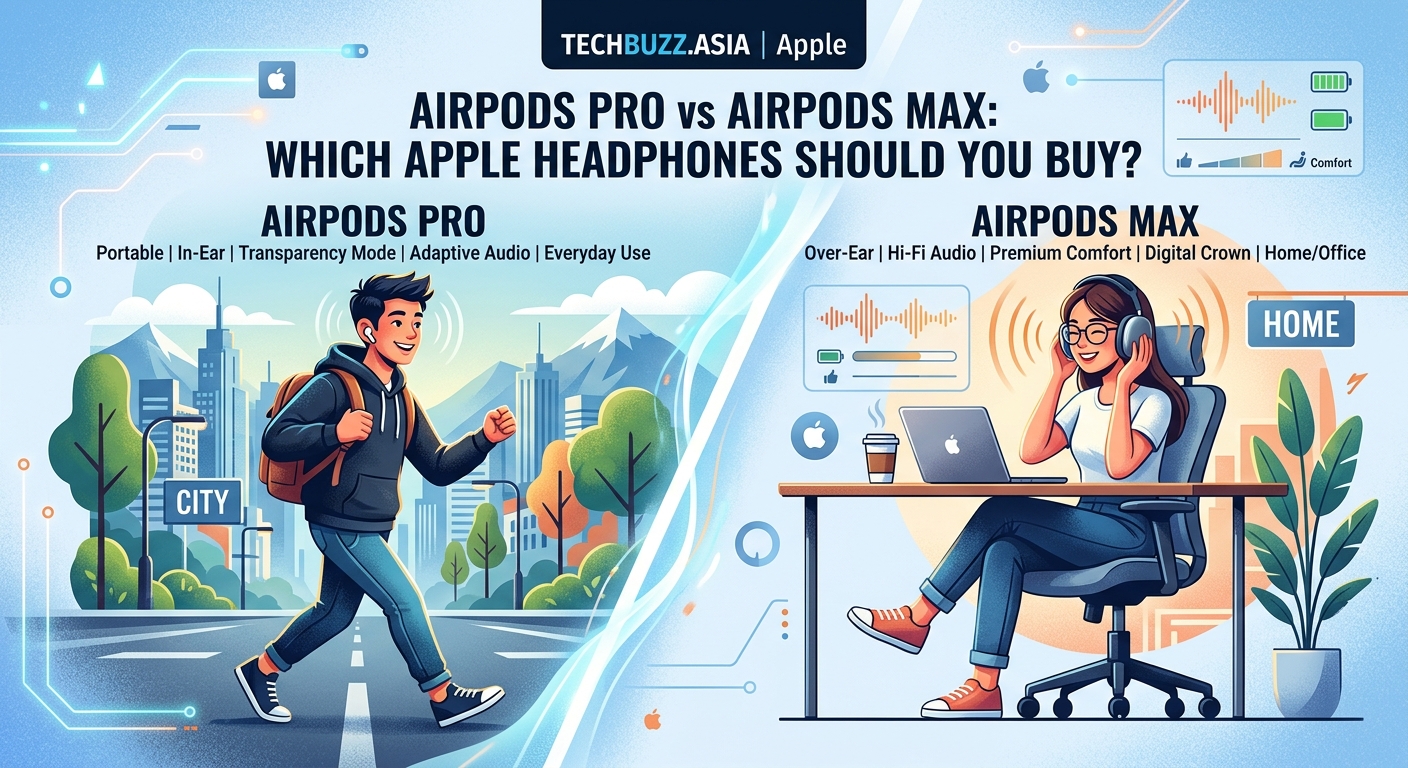
Both support “Hey Siri” for hands-free control. The Max also include a Digital Crown that lets you control volume precisely. Rotate it up or down, and the volume adjusts smoothly. Press once to play or pause. Press twice to skip forward. Press three times to skip back.
The Pro use force sensors built into the stems. Squeeze once to play or pause. Squeeze twice to skip forward. Squeeze three times to skip back. Squeeze and hold to switch between ANC and Transparency mode.
The Digital Crown feels more intuitive for volume control. The force sensor works fine but requires you to remember the squeeze patterns.
Find My Integration
Both products work with Apple’s Find My network. Lost an earbud? The app shows you its last known location. The Pro can play a sound to help you locate them. The Max can too, though losing something that large seems less likely.
Making Your Decision Based on Use Cases
Your daily routine determines which product makes sense.
Choose AirPods Pro if you:
- Commute on public transportation
- Work out regularly
- Travel frequently for work or pleasure
- Switch between devices constantly
- Need headphones that disappear when not in use
- Value having audio available at all times
- Want something that works for calls and music equally well
Choose AirPods Max if you:
- Work from home most days
- Have a dedicated listening space
- Prioritize audio quality above all else
- Don’t mind the weight during long sessions
- Rarely need headphones outside your home or office
- Want the best possible noise cancellation
- Plan to use them primarily for music and movies
Many people end up owning both. The Pro handle daily tasks and travel. The Max stay home for serious listening sessions. But if you’re choosing just one, think about where and how you’ll actually use them most often.
| Factor | AirPods Pro | AirPods Max |
|---|---|---|
| Price | $249 | $549 |
| Weight | 5.3g per earbud | 385g total |
| Battery (ANC on) | 6 hours + 24 hours case | 20 hours |
| Portability | Fits in pocket | Requires bag space |
| Sound quality | Excellent for size | Best in class |
| Comfort duration | All day | 2 to 4 hours |
| Best for | Everything | Focused listening |
Value Proposition and Long-Term Ownership
The price difference is substantial. At $549, the Max cost more than twice as much as the Pro’s $249. That extra $300 buys you better sound quality and more premium materials. Whether those improvements justify the cost depends entirely on how much you care about audio quality.
Consider the total cost of ownership. The Pro’s ear tips wear out over time. Apple sells replacements, but you’ll eventually need new ones. The Max’s ear cushions also degrade. Replacement cushions cost $69 per pair. The headband costs $79 if you need to replace it.
Both products connect only to Apple devices in their full capacity. You can use them with Android phones or Windows PCs via Bluetooth, but you lose automatic device switching, Spatial Audio, and other features. If you’re not deeply invested in Apple’s ecosystem, consider whether these headphones make sense at all.
Battery degradation affects both products over time. The Pro’s batteries sit inside tiny earbuds with limited thermal management. Heat degrades lithium-ion batteries faster. Expect the Pro’s battery life to noticeably decline after two years of regular use. The Max’s larger batteries handle heat better and should maintain capacity longer, similar to why your smartphone battery degrades faster than it should depending on usage patterns.
Apple doesn’t make battery replacement easy or affordable on either product. When the batteries die, you’re essentially buying new headphones.
Real-World Scenarios That Clarify Your Choice
Let’s walk through specific situations:
Scenario 1: Daily subway commute
The Pro win here. They block out train noise effectively. You can slip them in your pocket when you reach your stop. The Max would require carrying them in a bag all day. Too much hassle for a 30-minute commute.
Scenario 2: Home office work
The Max excel during long video calls and focus sessions. The superior comfort for stationary use and better microphone quality make them ideal for remote work. You’re not moving around, so the weight doesn’t matter. The improved sound quality makes music more enjoyable during deep work sessions.
Scenario 3: Gym workouts
The Pro are the only reasonable choice. The Max would slip around during any movement. Sweat would damage the premium materials. The Pro’s water resistance (IPX4 rating) handles workout sweat without issues. The Max have no water resistance rating.
Scenario 4: Long flights
This one’s closer. The Max provide better noise cancellation and sound quality for movies. But they’re less comfortable for sleeping, and the 20-hour battery might not last the entire journey if you’re crossing multiple time zones. The Pro’s 30-hour total capacity and smaller size make them more practical for travel, even if the audio experience isn’t quite as impressive.
Scenario 5: Weekend listening sessions
The Max justify their price here. Sitting down to really listen to music, the improved sound quality becomes obvious. The larger soundstage and better bass response make albums more engaging. If you dedicate time to focused listening, the Max deliver an experience the Pro can’t match.
Steps to Test Before You Buy
Don’t buy either product without trying them first. Here’s how to make an informed decision:
-
Visit an Apple Store and spend at least 15 minutes wearing each product. Walk around the store. Sit down. Move your head. Notice how each feels after the initial excitement wears off.
-
Test your most-listened-to music on both products. Use the same device and the same streaming quality. Listen for differences in bass, vocal clarity, and overall presentation.
-
Try the noise cancellation in a noisy environment. The store itself provides decent ambient noise. Notice how much external sound each product blocks.
-
Consider your carrying situation. Do you have a bag with you most days? Would you actually carry the Max, or would they stay home most of the time?
-
Think about your budget honestly. The Max cost $300 more. What else could you do with that money? Would you be just as happy with the Pro and $300 in your pocket?
Common Mistakes People Make When Choosing
Avoid these errors that lead to buyer’s remorse:
- Buying the Max because they’re “better” without considering portability needs
- Choosing the Pro to save money when you really want better sound quality
- Ignoring comfort differences because they feel fine in the store
- Forgetting about the Smart Case requirement for the Max
- Assuming the Max will work well for exercise or commuting
- Overlooking the fact that you rarely sit down for focused listening
- Buying based on what looks cooler rather than what fits your life
- Not considering that you might want both for different situations
Which Product Actually Fits Your Life
The AirPods Pro make sense for most people. They handle every situation reasonably well. Commuting, working out, traveling, video calls, music listening. Nothing stops them. They’re always with you because they’re small enough to forget about until you need them.
The AirPods Max serve a narrower purpose. They’re phenomenal at what they do, but what they do well is stationary listening. If that describes most of your headphone use, they’re worth every penny. If you’re constantly on the move, they’ll frustrate you with their size and weight.
The best choice isn’t always the more expensive one. It’s the one that actually fits into your daily routine without compromise. Think about where you’ll use headphones most often. That environment determines which product makes sense. Choose based on your real life, not your ideal life, and you’ll be happy with either option.

Post Comment