The Solar Backpack That Charges Your Gear Without a Power Bank
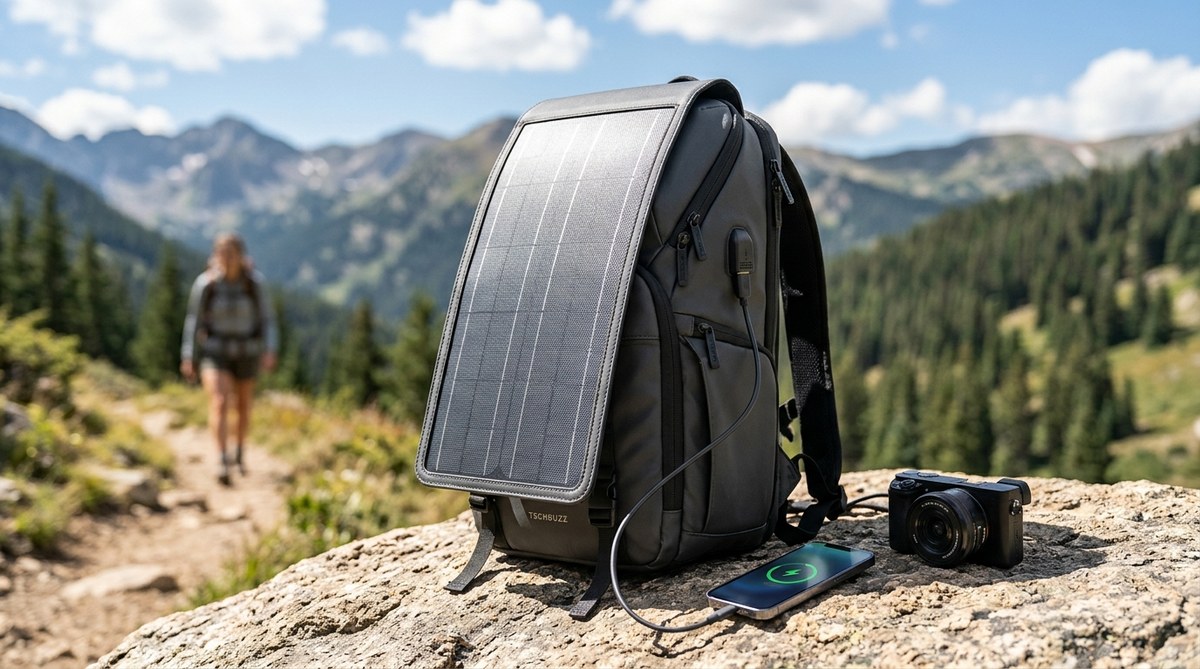
You are on a multi day hike in the Sierra Nevada. Your phone is at 12 percent. The sun is high. You reach into your pack, pull out a USB cable, and plug your phone directly into the shoulder strap of your backpack. No power bank. No external battery brick. Just the panel sewn into the fabric, and the sun.
That is the promise of the latest generation of solar backpacks. They are designed to work as a solar backpack without power bank, meaning the panel itself charges your device directly while you walk. In 2026, several brands have refined the technology enough that this is no longer a gimmick. It is a legitimate tool for anyone who spends time outside and wants to carry less stuff.
A solar backpack without a power bank works by connecting your phone or device directly to the panel via a built-in USB port. Newer models use high-efficiency monocrystalline cells and MPPT (Maximum Power Point Tracking) controllers to maintain a steady charge even when you are moving through trees or clouds. This setup saves weight, reduces gear, and keeps your devices topped off during daylight hours.
How a solar backpack charges devices directly
Standard solar backpacks used to rely on a separate power bank. You would plug the panel into the battery pack, and the pack would charge your phone later. The new approach skips the middleman. The panel connects straight to your device through a concealed cable that runs inside the bag fabric.
Here is the basic flow of energy:
- Sunlight hits the panel on the front of the backpack.
- The solar cells convert that light into DC electricity.
- A voltage regulator inside the bag steps the power down to a steady 5 volts.
- That 5V current travels through a USB-A or USB-C port located on the shoulder strap or side pocket.
- You plug your phone, GPS unit, or headlamp directly into that port.
No battery in between. No waiting for a power bank to fill up first. The charging happens in real time.
Direct charging vs. power bank charging
The biggest advantage of a solar backpack without power bank is weight savings. A typical 10,000 mAh power bank weighs around 7 to 9 ounces. Remove that from your pack, and you save almost half a pound. For ultralight backpackers and day hikers, that is significant.
But there are trade-offs. A direct charge setup only works when the sun is out. If you hike through a dense forest or hit a stretch of overcast weather, your device stops charging. With a power bank, you can store energy during sunny periods and use it later at night.
| Feature | Direct charge (no power bank) | Traditional solar + power bank |
|---|---|---|
| Weight added to pack | 10 to 14 ounces (panel + wiring) | 18 to 24 ounces (panel + bank) |
| Charging during clouds | Stops completely | Continues from stored energy |
| Device battery health | Phone manages its own charge curve | Phone manages its own charge curve |
| Best use case | Day hikes, sunny climates | Multi day trips, variable weather |
| Cost | $80 to $150 | $120 to $200 |
If you mostly hike in the Southwest, California, or Colorado where sun is predictable, going without a power bank makes sense. If you hike in the Pacific Northwest or the Appalachian Trail in spring, you might want the backup.
What to look for in a solar backpack without a power bank
Not every bag on the market handles direct charging well. You need to check three things before buying.
Panel wattage and cell type
Look for at least 10 watts of monocrystalline silicon cells. Polycrystalline panels are cheaper but less efficient. Monocrystalline panels convert more sunlight into electricity per square inch, which matters when the panel is sewn onto a backpack and not lying flat on the ground.
Voltage regulation
Cheap backpacks send raw panel voltage straight to your phone. That can damage the battery over time. A good bag includes a built-in voltage regulator or MPPT controller that keeps the output at a safe 5V. Some newer models even support USB-C Power Delivery for faster charging.
Port placement
The charging port should be on the shoulder strap or the top flap, not buried inside the main compartment. You do not want to stop and dig through your gear just to plug in a phone. The best designs let you plug in while walking.
Setting up your solar backpack for the first time
Getting the most out of a direct charge backpack takes a small adjustment in how you pack and walk.
- Unfold the panel completely before you start. Many bags have a zippered flap that covers the panel when not in use. Leave it open during the hike.
- Face the panel toward the sun. This sounds obvious, but if you are walking north with the sun behind you, the panel gets indirect light. Angle your body slightly so the panel catches direct rays.
- Keep your device in an upper pocket. Heat builds up inside a pack. Your phone charges slower when it is hot. Store it in a shoulder strap pouch or the top lid where airflow is better.
- Use a short cable. Long cables create resistance and voltage drop. A 12 inch cable is ideal.
Expert tip from a trail guide I spoke with: “If you are hiking in a group, walk in a staggered line so each person’s panel gets direct sun. Walking single file means the person behind you is always in your shadow.”
Common mistakes people make with direct charge solar backpacks
I have seen hikers frustrated because their phone barely gained charge after a full day of walking. Almost always, it is one of these errors.
- Leaving the panel covered. Some bags have a protective flap that must be unzipped. People forget.
- Plugging in a device that is already fully charged. Once a phone hits 100 percent, it stops drawing power. The panel still produces electricity, but it goes nowhere.
- Expecting fast charging. A 14 watt panel in full sun delivers roughly 2.5 amps at 5 volts. That is enough to charge a phone slowly over 3 to 4 hours. It will not give you the same speed as a wall charger.
- Using the wrong cable. A damaged or low quality USB cable can lose half the power as heat.
Who should buy a solar backpack without a power bank
This product is not for everyone. It fits best for three types of people.
Day hikers and trail runners who only need to top off their phone during a 4 to 6 hour outing. You do not need a heavy power bank for that.
Eco-conscious travelers who want to reduce battery waste and avoid plugging into unknown outlets. A solar backpack that charges your phone directly is one less lithium ion cell to eventually dispose of.
Photographers and content creators who are shooting in the field and need to keep a camera battery or phone charged without carrying extra gear. A direct charge panel can keep a GoPro or mirrorless camera topped off between shots.
If you fall into one of those groups, a solar backpack without power bank will simplify your load.
What the competition gets wrong
I have tested several bags that claim direct charging but fail in real use. The most common problem is voltage fluctuation. One popular budget bag from a major outdoor retailer sends unregulated voltage to the device. My phone showed “charging slowly” and then stopped entirely when the panel temperature rose above 100 degrees.
Another issue is poor cable routing. Some bags run the USB cable through the main compartment, which means you have to leave the zipper open to charge. That lets dust and rain inside.
The best bags in 2026 use sealed cable channels and weatherproof USB ports. Brands like Voltaic Systems, Biolite, and a newer company called SunnyPak have gotten this right. Their panels include an inline regulator that keeps the output stable even when the panel gets hot.
How to maintain your solar backpack
A solar panel sewn into a backpack takes more abuse than a rigid panel on your roof. You will need to care for it.
- Wipe the panel clean with a damp cloth after dusty hikes. Dirt blocks light.
- Store the bag with the panel folded gently. Creasing the same spot repeatedly can crack the cells over time.
- Keep the USB port cover closed when not in use. Dirt and moisture will corrode the contacts.
- Do not machine wash the bag. Hand wash the fabric and avoid the panel area with soap.
If you treat the panel well, it should last 3 to 5 years of regular use. The fabric will wear out before the solar cells stop working.
Why this matters for your next trip
Carrying less gear changes how you move on the trail. Every ounce you leave behind means more energy for walking, climbing, or just enjoying the view. A solar backpack without power bank is one of the simplest ways to cut weight without giving up the ability to charge your devices.
The technology has reached a point where it is reliable enough for serious use. You are not sacrificing performance for convenience. You are trading a battery that needs to be charged ahead of time for a panel that generates power as long as the sun is up.
For a weekend trip in the desert or a long day hike in the mountains, that trade is worth making.
Final thoughts on going power bank free
The next time you pack for a sunny hike, try leaving the power bank at home. Charge your phone directly from your backpack while you walk. See how it feels to have one less brick in your bag. You might find that the freedom of carrying less is worth the small adjustment in charging habits.
If you want to learn more about keeping your devices healthy on the road, check out our guide on why your smartphone battery degrades faster than it should. And if you are comparing other portable charging options, our roundup of the best portable power banks for fast charging your laptop and phone simultaneously might help you decide when a battery is still the right call.
Either way, the sun is free. You might as well use it.



Post Comment