Are Wireless Charging Pads Still Relevant When Phones Charge to 80% in 15 Minutes?
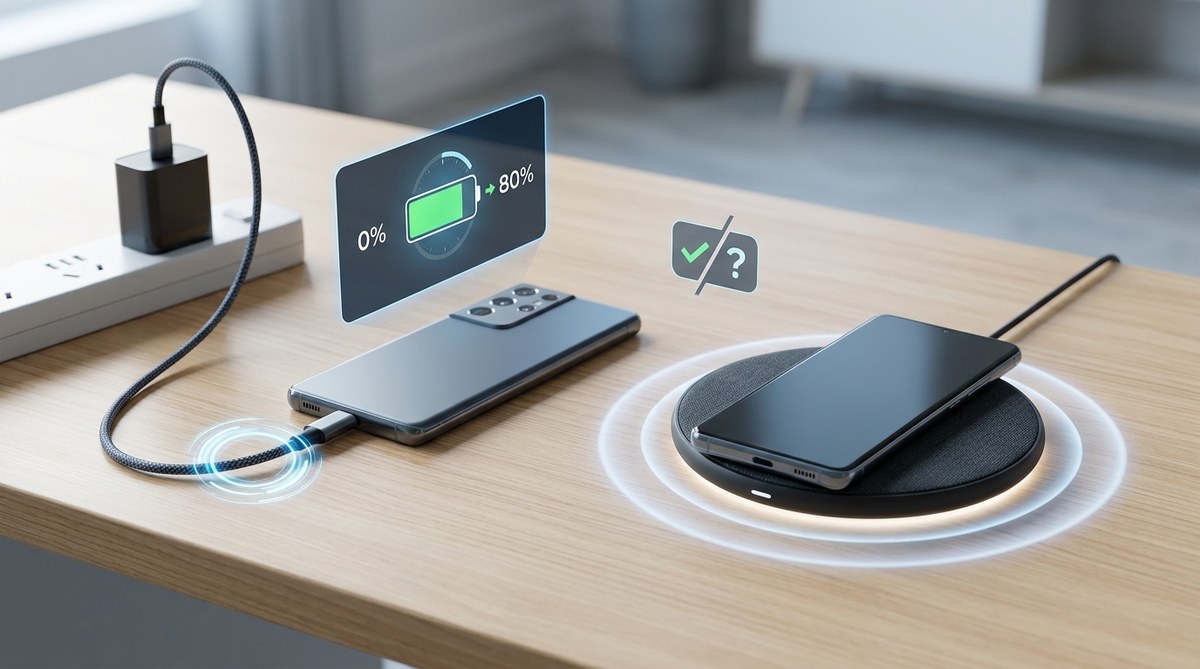
Charging your smartphone wirelessly has become a common convenience. But with rapid charging capabilities, many wonder if wireless pads still hold relevance when phones hit 80% charge in around 15 minutes. As fast-charging tech improves, the question is whether wireless charging remains a practical and safe option or if its role diminishes in a world of quick top-ups.
Understanding fast charging and wireless technology
Fast charging has transformed how we power up our devices. Phones can now reach 80% in a quarter of an hour, thanks to higher wattage chargers and optimized battery management. Wireless charging, mainly based on Qi standards, has also evolved, offering speeds up to 15 or even 25 watts.
However, the real question isn’t just about speed. It’s about relevance—does wireless charging still serve a purpose when rapid wired charging is so efficient? To answer that, we should look at how these technologies compare and complement each other.
The impact of rapid charging on battery health
Fast chargers are designed to deliver energy quickly, but this process isn’t without consequences. High thermal output during rapid charging can stress the battery, potentially leading to faster degradation over time.
Experts suggest that maintaining a battery between 20% and 80% charge helps prolong its lifespan. Charging to 100% or letting it drain completely accelerates wear. Wireless pads typically operate at lower wattages, generating less heat, which can be less stressful for your phone’s battery.
According to battery health specialists, managing heat during charging is key. Using wireless chargers in controlled environments can help maintain battery longevity, especially when fast wired charging isn’t necessary.
When and why wireless charging remains relevant
Wireless charging shines in scenarios where convenience outweighs speed. For instance:
- When you want to top up your device during meetings or work sessions without fiddling with cables.
- For overnight charging, where slow, steady power delivery minimizes heat and stress.
- When your phone is placed on a desk or nightstand, ready for quick pickups.
Even when phones charge to 80% in 15 minutes, wireless pads offer a seamless way to keep devices topped up between sessions. They are particularly handy for daily routines, reducing cable clutter and wear on charging ports.
Practical tips to make wireless charging more effective
- Use high-quality chargers that comply with standards like Qi2 or newer. They deliver consistent power and reduce heat.
- Position your phone correctly on the pad, aligning the charging coil with the pad’s transmitter to maximize efficiency.
- Avoid charging in hot environments or covering your phone, as heat hampers battery health.
- Combine wired and wireless charging based on your needs—wired for rapid top-ups, wireless for convenience.
- Keep your firmware and apps updated to optimize charging processes and battery management.
Techniques and common mistakes
| Techniques | Mistakes |
|---|---|
| Use certified wireless chargers | Using cheap, uncertified pads can cause overheating |
| Place the phone centered on the pad | Off-center placement results in slower charging or heat buildup |
| Keep your environment cool | Charging in hot spaces accelerates battery wear |
| Regularly clean charging contacts | Dust or debris diminishes efficiency and causes heat |
Does charging to 80% in 15 minutes make wireless charging obsolete?
Charging to 80% in a short span primarily concerns wired fast-charging tech. Wireless charging generally operates at lower wattages, often between 5W to 15W. This means it naturally charges more slowly compared to wired fast chargers, which can deliver 50W or more.
For users who prioritize battery longevity, topping up wirelessly during the day can be a gentle way to keep your device alive without stressing the battery. When you need a quick top-up before heading out, wired fast charging remains the best option.
Wireless charging remains relevant because it offers a hands-free, cable-free experience that complements fast charging rather than replacing it. It’s about convenience, not necessarily speed.
Is wireless charging still worth considering?
Absolutely. Wireless charging continues to evolve, with new standards promising faster, more efficient, and cooler operation. For daily use, especially when you want to avoid wear on your charging port, wireless pads are a practical choice.
In environments where your device remains stationary, like an office desk or bedside table, wireless charging can be a smarter, less stressful method. It also reduces cable clutter and makes grabbing your device easier.
Expert advice on balancing charging methods
Industry battery consultants recommend switching between wired and wireless charging based on your daily routine. Use wired for quick top-ups and wireless for regular, low-stress charging sessions. This approach safeguards your battery health while keeping your device ready when you need it.
Final thoughts: does wireless charging still have a role?
In an era where phones rapidly reach 80% in 15 minutes, wireless charging remains a valuable part of your charging strategy. It isn’t about replacing wired fast chargers but about filling in the gaps with a less stressful, more convenient method.
If you’re concerned about battery longevity, remember that managing heat and avoiding constant full charges are more critical than the charging method itself. Wireless pads can complement your charging habits by offering a gentle, accessible way to keep your device topped up throughout the day.
By choosing quality wireless chargers and using them wisely, you can enjoy the convenience without sacrificing your phone’s health. Keep an eye on emerging standards and innovations, as wireless charging technology continues to improve, making it even more relevant in the fast-paced world of mobile tech.
Embracing the future of battery care
Picking the right charging approach depends on your lifestyle. For quick boosts, wired fast charging is unbeatable. For everyday convenience and to preserve battery health, wireless charging still holds its ground. Combining both methods based on your needs will help your device stay healthy longer.
Remember, the key isn’t just about how fast your phone charges. It’s about how wisely you manage heat and charge levels. With thoughtful habits and quality gear, wireless charging remains a convenient, relevant, and safe option for modern smartphone users.

Post Comment