Are Wireless Earbuds Finally Better Than Wired for Gaming?
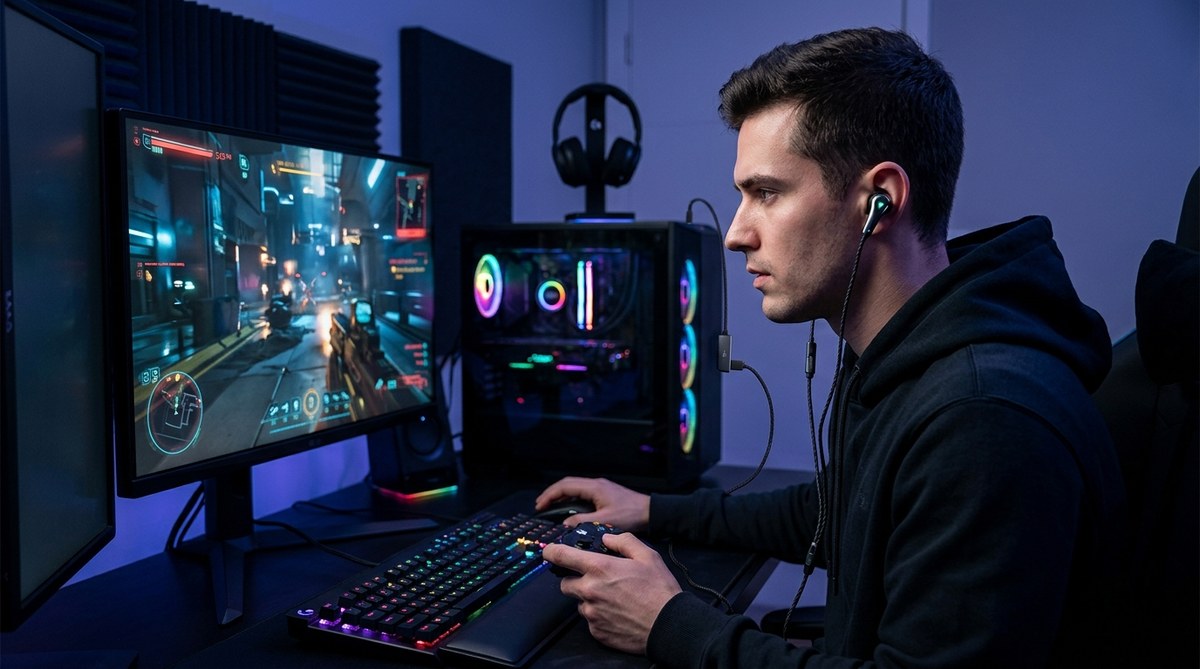
For years, the debate around wireless earbuds vs wired for gaming was a one sided affair. Wired just won. Every time. Gamers accepted the cable tangles and occasional snag because nothing beat the zero latency and rock solid audio of a physical connection. But the world of wireless audio has changed in a big way. Bluetooth codecs have gotten smarter, connection tech has matured, and battery life is no longer a joke. Today, the question is not whether wireless is better across the board, but whether it has finally closed the gap enough to make wired a real choice instead of a default. Let’s find out if you can finally cut the cord without cutting your K/D ratio.
Wireless earbuds in 2026 are no longer a joke for gaming, but they haven’t fully replaced wired for competitive play. Latency has dropped to near imperceptible levels on premium models, especially those using LC3 or proprietary lossless codecs, but budget options still lag. Sound quality parity is real, especially for casual and single player titles. Battery life and convenience tip the scales for many, but hardcore esports players should still lean wired. The right choice depends on your game genre, your budget, and your tolerance for cables.
The Latency Reality Check
Latency is the biggest fear for any gamer considering wireless earbuds. That tiny delay between pressing a button and hearing the shot can mess up your timing in a firefight. Traditional wired setups have near zero latency, around 1 to 5 milliseconds. Standard Bluetooth earbuds used to hover around 150 to 300 ms, which is unplayable for fast paced games.
But 2026 is a different world. The widespread adoption of Bluetooth LE Audio and the LC3 codec has pushed latency down dramatically. High end gaming earbuds from brands like Razer, Sony, and EPOS now achieve round trip latencies of 30 to 50 ms over a dedicated 2.4 GHz wireless connection, not Bluetooth. Those numbers are close enough that most players cannot feel the difference.
Here is what you need to look for when shopping:
- Dedicated 2.4 GHz wireless dongle: This is the gold standard. Avoid plain Bluetooth for competitive gaming.
- LC3 or aptX Low Latency support: If you must use Bluetooth, these codecs cut delay significantly.
- Game mode toggle: Many earbuds now include a low latency mode that prioritizes speed over battery.
For context, professional fighting game and FPS players still prefer wired in tournaments. But for the average player grinding ranked matches at home, a good wireless earbud is totally fine. The gap has shrunk from a canyon to a crack.
Audio Fidelity: Wired Still Sounds Better, But Not By Much
Sound quality is where the wireless earbuds vs wired for gaming debate gets interesting. Wired earbuds deliver uncompressed audio directly from your source. There is no encoding, no compression, no interference. That means you get every footstep, every gunshot, and every subtle piece of environmental audio exactly as the developer intended.
Wireless earbuds have to compress the audio stream to fit through the air. Even the best codecs like LDAC or LC3 are lossy, though modern compression is incredibly good. In blind tests, most gamers cannot tell the difference between wired and high quality wireless when playing games. Music is another story, but for gaming, the gap is narrow.
The real advantage wired holds is in consistency. Wireless can suffer from occasional dropouts or interference in crowded Wi-Fi environments. If you live in an apartment building with a hundred networks competing for airtime, you might hear the occasional skip or pop. Wired will never do that.
For immersive single player games like The Witcher 4 or Elden Ring 2, wireless earbuds with good codecs sound fantastic. For competitive shooters where hearing a reload from 50 meters matters, wired still has a slight edge for the purists.
| Aspect | Wired Earbuds | Wireless Earbuds (2026 Premium) |
|---|---|---|
| Latency | 1-5 ms | 20-50 ms (2.4 GHz) / 60-100 ms (Bluetooth LC3) |
| Audio compression | Uncompressed | Lossy (but excellent) |
| Dropout risk | None | Low, but possible |
| Soundstage | Excellent | Very good |
| Best for | Competitive, esports | Casual, single player, mobile |
Battery Life: The New Bottleneck
One of the biggest practical concerns with wireless earbuds for gaming is battery life. A typical gaming session can run two to three hours, sometimes longer. Many true wireless earbuds offer four to six hours per charge, which is fine for most sessions. But if you forget to charge them, you are stuck.
Gaming earbuds with dedicated dongles often have larger batteries to support the higher power draw. Some models now offer up to eight hours of continuous gaming use. The charging case adds another two or three full charges. Compare that to wired earbuds, which literally never run out.
There is another hidden issue. Active noise cancelling, which many wireless gaming earbuds include, eats battery even faster. If you game in a noisy environment, you might get less than four hours. That is annoying if you are in the middle of a marathon session.
“Battery anxiety is real for wireless gamers,” says Marcus Chen, a hardware reviewer with 15 years of experience. “I always tell people to buy earbuds with at least six hours of rated game time, and keep a wired set as backup for when the case is empty.”
Wired earbuds will never need a recharge, which is a comfort. But with fast charging and USB-C cases, the inconvenience is manageable for most.
Comfort and Fit: Tiny Packages, Big Differences
Wired earbuds have a major advantage in weight and size. They don’t need a battery, a wireless chip, or an antenna. That means they can be smaller and lighter. For long gaming sessions, that can matter. A 5 gram earbud per ear is less fatiguing than a 7 or 8 gram one.
However, wireless earbuds have improved their ergonomics dramatically. Many now come with multiple ear tip sizes and wing tips to secure them during movement. For console gamers who lean back or move around, the lack of a cable is liberating. No more catching the cord on your controller or chair armrest.
Wired earbuds also suffer from microphonics, the noise of the cable rubbing against your clothes. That can be distracting during quiet moments in games. Wireless eliminates that entirely.
If you play on PC and sit still at a desk, comfort is about equal. If you play on console, mobile, or like to stretch your legs, wireless wins hands down.
Setup and Convenience
Setting up wired earbuds is trivial. Plug them in and go. Wireless earbuds require pairing, charging, and sometimes firmware updates. That friction is real, but it is getting better. Most modern gaming earbuds remember multiple devices and switch automatically.
Here is a typical setup process for wireless gaming earbuds with a dongle:
- Charge the earbuds and the case fully.
- Plug the USB dongle into your PC, console, or Switch dock.
- Remove the earbuds from the case. They should pair automatically.
- If they don’t, put them in pairing mode (hold the button on the case or the touch control).
- Open your system sound settings and select the earbuds as your output device.
- (Optional) Download the companion app to tweak EQ, enable game mode, or adjust ambient sound.
Wired earbuds skip all of that. But once wireless are set up, they often reconnect faster than wired manages to pick up the cable from the desk.
Price and Value
Wired earbuds are generally cheaper. You can get a very good wired pair for $50 that sounds as good as $150 wireless earbuds. The premium you pay for wireless goes into the battery, the chipset, and the case. For gamers on a budget, wired is still the smarter financial choice.
But wireless earbuds are dropping in price. In 2026, you can find capable gaming earbuds for around $80 that perform well in all but the most competitive scenarios. The extra cost is a convenience tax, not a performance tax.
If you often play on multiple devices, wireless can actually save you money. You don’t need separate headsets for PC, console, and phone. One pair of wireless earbuds can serve all three, as long as the dongle is compatible.
The Verdict: When to Choose Each
Let’s break it down by gaming profile.
Choose wired earbuds for gaming if:
– You are a competitive esports player in FPS or fighting games.
– You absolutely cannot tolerate any audio delay.
– You have a tight budget and want the best sound per dollar.
– You play in a crowded Wi-Fi environment with lots of interference.
Choose wireless earbuds for gaming if:
– You play mostly single player or casual multiplayer games.
– You value freedom of movement and hate cables.
– You game on multiple platforms and want one audio solution.
– You want noise cancelling for immersive sessions or noisy rooms.
For most gamers in 2026, wireless earbuds are good enough. The technology has matured to the point where only the most demanding players need wired. And even they might switch during practice or travel.
What About Mobile and Console Gaming?
Mobile gamers have embraced wireless earbuds for years. The combination of portability, no cables, and decent latency makes them ideal for Call of Duty Mobile or Genshin Impact. Wired earbuds with a USB-C or 3.5mm adapter work too, but that dongle is easy to lose.
Console gamers have a more complicated relationship with wireless earbuds. The Xbox, PlayStation, and Switch all support Bluetooth audio, but with varying levels of latency. The PlayStation 5 now supports Bluetooth LE Audio natively, which is a huge improvement. For the Switch, you still need a USB-C dongle for low latency, but that is a minor inconvenience.
If you want to learn more about optimizing your wireless gaming setup, check out our guide on 7 Hidden Features in Your Router That Could Double Your Wi-Fi Speed. A stable network helps prevent audio stutters.
A Final Look at the Trade Offs
Here is a markdown ready table summarizing the key differences at a glance:
| Feature | Wired Earbuds | Wireless Earbuds |
|---|---|---|
| Latency | Near zero | 20-50 ms (premium) |
| Audio quality | Uncompressed | Lossy but excellent |
| Battery | Never dies | 4-8 hours + case |
| Comfort | Lighter, but cable noise | Heavier, no cable |
| Setup | Plug and play | Pair and update |
| Price | $20 – $100 | $60 – $250 |
| Best use case | Competitive FPS, esports | Casual, mobile, immersive |
Why the Wired vs Wireless Choice Matters More Than Ever
The wireless earbuds vs wired for gaming debate in 2026 is not about right or wrong. It is about what fits your life. If you commute, travel, or game in bed, wireless is a game changer. If you live and die by ranked play, wired still offers that final percentage point of reliability.
The good news is that you do not have to choose permanently. Many gamers keep both. A cheap wired pair for sweaty matches and a wireless pair for everything else. That is totally valid.
Before you buy, make sure you understand your own audio needs. Do you need noise cancelling? Check out our comparison of How to Choose Between Noise-Cancelling Earbuds and Over-Ear Headphones for a broader view. And if battery life is a worry, read our article on Why Your Smartphone Battery Degrades Faster Than It Should because the same principles apply to earbuds.
So, Which Should You Pick?
Here is the short version. If you play competitive shooters or fighting games at a high level, stick with wired earbuds or a wired headset. If you play anything else, wireless earbuds are ready for prime time. Pick a pair with a low latency dongle, a good codec, and decent battery. Try them out in a few matches. You might be surprised how little you miss the cable.
The technology has finally caught up. The only question left is whether you are ready to let go. Give wireless a shot. Worst case, you keep a backup wired pair in your drawer. Best case, you free yourself from the cord forever.

Post Comment