Is Apple’s Trade-In Program Actually a Good Deal? We Crunch the Numbers
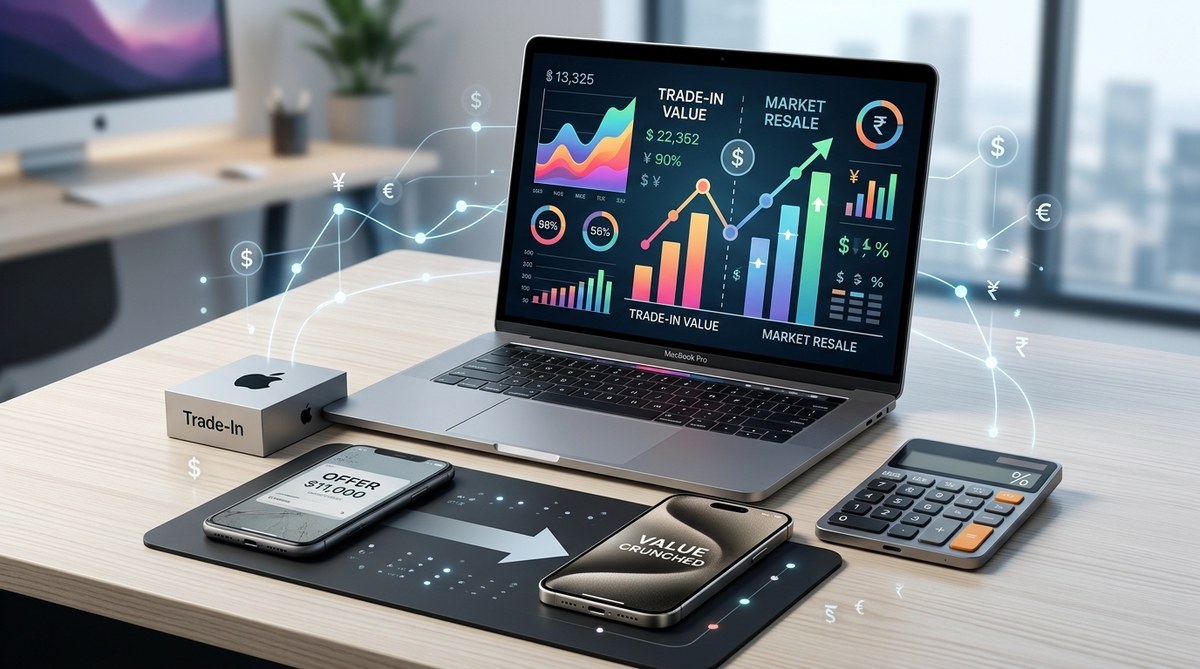
You just got the notification that your new iPhone is ready to order. But before you hit that buy button, there is that nagging question about your current device. Apple offers to take it off your hands with a trade-in credit. The number looks decent. But is it actually fair? Or are you leaving cash on the table by not selling it yourself? We put Apple’s trade-in program under the microscope, ran the numbers, and compared it against every major alternative. Here is what we found.
Apple’s trade-in program offers unmatched convenience and seamless integration with your device upgrade, but it rarely gives you the highest dollar value. Our analysis shows that while Apple’s offers are competitive with other trade-in services, selling your device independently on Swappa or Facebook Marketplace can net you 20-40% more. However, the trade-off involves time, effort, and scam risks. For many users, the convenience makes Apple’s program worthwhile, especially when promotional trade-in bonuses appear during launch season.
How the Apple trade-in process works
Apple has made trading in your device almost too easy. You do not need to negotiate with strangers or worry about shipping damage. The process follows a clear set of steps that anyone can handle in under ten minutes.
-
Start online or in store. You can begin your trade-in when you order a new device on Apple’s website, or you can walk into any Apple Store. The online tool asks a few questions about your device’s condition, including whether the screen has cracks, if the camera works, and whether the battery holds a charge.
-
Get an instant estimate. Apple uses an algorithm that pulls current market data to generate a trade-in value on the spot. This number is good for roughly two weeks, which gives you time to decide. If you are in a store, a specialist can evaluate your device right there.
-
Send it in or hand it over. If you ordered online, Apple sends you a trade-in kit with a prepaid shipping label and packaging. You wipe your device, pack it up, and drop it off. If you are in a store, you hand it to a specialist who runs a quick diagnostic.
-
Receive your credit. Once Apple receives and inspects your device, they credit the trade-in value to your payment method or apply it directly to your new purchase. If the device value changes after inspection (for example, you missed a crack), Apple emails you a revised offer that you can accept or decline.
Apple will even recycle any device for free, even if the trade-in value is zero. That is a nice touch for older gadgets that have no resale market.
Trade-in value vs. selling outright
The biggest question is about dollars. How does Apple’s offer stack up against what you could get by selling your device on your own? We looked at real data for a 128GB iPhone 15 Pro in good condition during early 2026 to build this comparison.
| Service | Typical payout | Effort level | Risk level | Timeline |
|---|---|---|---|---|
| Apple Trade-In | $410 | Very low | Very low | 1 to 2 weeks |
| Best Buy Trade-In | $380 | Low | Low | Same day |
| Gazelle / Decluttr | $370 | Low | Low | 1 to 2 weeks |
| Swappa (private sale) | $550 | Medium | Medium | 1 to 7 days |
| Facebook Marketplace | $580 | High | High | 1 to 7 days |
Apple lands near the middle of the pack among trade-in services. Best Buy and dedicated resellers often pay similar amounts, sometimes slightly less. But private sales on Swappa or Marketplace consistently pay 30% to 40% more. That difference can be significant.
However, private sales come with real headaches. You need to take good photos, write a listing, answer messages from potential buyers, and handle shipping or in-person meetups. There is always a chance that a buyer claims the device arrived damaged or tries to scam you. For many people, that friction is not worth the extra money.
When Apple trade-in makes sense
Apple’s program shines in specific situations. Here are the scenarios where trading in with Apple is a smart move.
-
You upgrade every year. Apple offers some of the best trade-in values for recent models. If you are on a yearly upgrade cycle, the difference between Apple’s offer and a private sale shrinks because your device is still in high demand. The convenience of a quick, guaranteed credit is hard to beat.
-
You want the lowest upfront cost. When you trade in during checkout, Apple applies the credit immediately to your new purchase. You pay less sales tax on the new device, and you do not have to front the full cost while waiting for a private sale to close.
-
Your device has damage. Apple still accepts devices with cracked screens or other issues, though they adjust the offer. Private buyers often avoid damaged devices entirely or demand steep discounts. If your phone has a cracked back or a worn battery, Apple’s offer may be closer to what you would get elsewhere.
-
You value your time over maximum profit. If you make over $30 an hour, the hours spent photographing, listing, messaging, and shipping a phone might not be worth the extra $150 you could earn. Apple’s trade-in takes minutes, not days.
Speaking of battery health, if you are worried about your device’s condition affecting the trade-in offer, you might want to look at our guide on how to maximize battery life on your iPhone in 2026 before you hand it in.
When to skip Apple trade-in
There are also clear times when you should walk away from Apple’s offer and sell your device yourself.
“If you have a flagship device that is less than two years old and in pristine condition, you are almost always better off selling it privately. Apple’s trade-in program is built for convenience, not maximum value. The gap is wider on higher-end models like Pro and Max variants, where private buyers are willing to pay a premium for the latest hardware.” – Julia Torres, mobile device analyst at TechValue Research
Julia’s advice matches our data. The gap between Apple’s offer and private sale value grows as the device’s age decreases. A one-year-old iPhone 15 Pro Max in mint condition might fetch $700 on Swappa, while Apple offers around $520. That is a $180 difference that could buy you a decent pair of wireless earbuds or cover your cellular plan for several months.
You should also skip Apple’s trade-in if:
- You have the original box and accessories (private buyers pay more for complete packages).
- You are not in a rush to sell and can wait for the right buyer.
- You are comfortable meeting in a public place or shipping with insurance.
- Your device has a rare color or configuration that collectors seek out.
If you are trying to decide whether to upgrade now or hold off, our breakdown on whether to wait for the iPhone 16 or buy the iPhone 15 now can help you time your trade-in for maximum value.
Hidden factors that affect your trade-in offer
Apple’s trade-in value is not random. Several factors quietly influence what you see on screen, and understanding them can help you get a better offer.
Device age matters most. Apple’s algorithm heavily weights how many generations old your device is. A three-year-old iPhone is worth significantly less than a two-year-old model, even if both are in similar condition. This is because Apple’s internal refurbishment program favors newer devices that can be resold at a higher price.
Storage capacity has diminishing returns. A 512GB iPhone does not trade in for double what a 128GB model gets. The premium for extra storage is smaller on trade-in than it is in the private market. If you bought the larger storage option, you will recoup more of that investment by selling independently.
Cosmetic condition is judged strictly. Apple uses a standardized grading system. Any scratch, dent, or crack reduces the offer. But the reduction is not always proportional to the cost of repair. A small hairline crack on the back glass might drop the value by $100, while the same crack on the front screen could cut it by $200. The front display is more expensive for Apple to refurbish.
Regional differences exist. Trade-in offers vary slightly by country and sometimes by state. Apple adjusts for local market demand and refurbishment costs. If you live in a region where a certain model is especially popular, your offer might be higher than the national average.
Promotional periods boost value. Apple often runs limited-time trade-in promotions during the first few weeks after a new iPhone launch. These events can add $30 to $80 to your trade-in value. If you can wait until September or October 2026, you might get a noticeably better deal.
Before you send your device off, it is smart to review how to properly wipe your data. Our guide on 5 Apple privacy settings you should change right now covers the steps to make sure your personal information stays safe during the trade-in process.
Making the right choice for your upgrade in 2026
So where does that leave us? Apple’s trade-in program is a fair deal for people who prioritize ease and speed. You lose some money compared to selling privately, but you gain peace of mind and hours of your time. For many Apple device owners, that trade is worth it.
Here is a simple way to decide. Open a calculator and put in the difference between Apple’s offer and the average private sale price for your specific device. Divide that number by how many hours you think it will take to sell the device yourself. If the resulting hourly rate is lower than what you value your time at, go with Apple. If it is higher, sell it yourself.
For example, if you can earn $170 more by selling on Swappa and it takes you three hours of total effort, that is about $57 per hour. If your time is worth more than that, Apple’s trade-in wins. If your free time is less expensive, the private sale makes sense.
Also consider what happens when Apple eventually stops supporting older devices. Trade-in values drop to near zero once a device falls off the supported list. Our article on what happens when Apple stops supporting your device explains why trading in before that cutoff date is crucial.
What we recommend for your next upgrade
Apple’s trade-in program is not a trap. It is not the best deal you can get either. It sits right in the middle: fair value for minimal effort.
If you are the type of person who wants the new device in your hands as soon as possible, who does not want to deal with strangers, and who prefers a predictable transaction, trade in with Apple. You will get a reasonable credit, your new device will cost less upfront, and you will move on with your life.
If you are more budget-conscious or enjoy the process of selling, take the private sale route. The extra cash is real, and platforms like Swappa make the process safer than it used to be. Just be prepared for a few tire-kickers and the occasional lowball offer.
Either way, you are upgrading your tech, which is always a good feeling. Run the numbers for your specific device, factor in how much you value your time, and make the choice that feels right for you. Your next Apple device is waiting.


Post Comment